



Last Updated on July 13, 2026
Why Do Trailer Tires Blow Out in the Summer? (And How to Prevent It)
If you have ever asked yourself, why do trailer tires blow out in the summer, the answer lies in a deadly combination of intense asphalt heat, underinflation, overloading, and exceeding the tire’s maximum speed rating (often just 65 mph). Additionally, many new trailers come equipped with low-quality factory tires (colloquially known in the RV community as “China bombs”) that cannot handle the severe sidewall flexing caused by high temperatures. To prevent blowouts, upgrade to reputable ST tires, replace them every 4 to 5 years regardless of mileage, inflate them to the proper cold PSI, and use a Tire Pressure Monitoring System (TPMS).
The Terror of Summer Road Trips: The RV Blowout Epidemic
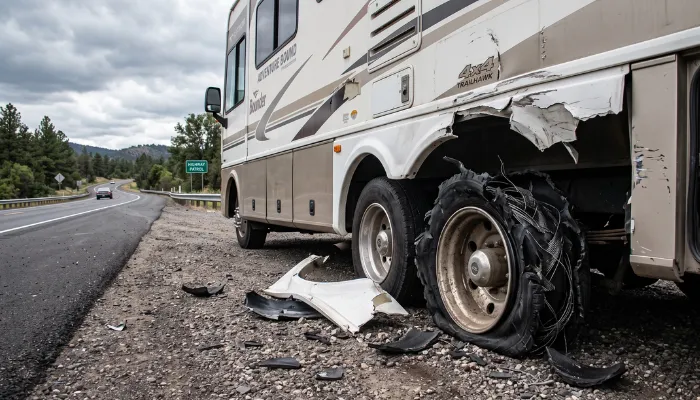
It is the peak of July. You have the family loaded up, the camper hitched, and you are cruising down the interstate on the way to the campground. Suddenly, you hear a deafening bang, followed by violent shaking. By the time you pull over, your trailer’s wheel well is shredded, the fender skirt is gone, and you are left staring at a mangled mess of wire and rubber wrapped around your axle.
If you browse any RV community, such as r/GoRVing, during the months of July and August, you will see endless threads titled “Blown tires, so frustrating” or “What’s up with all the trailer blowouts!”
Trailer tire blowouts are not just an inconvenience; they are a massive safety hazard that can cause thousands of dollars in body damage to your rig. But exactly why do trailer tires blow out in the summer so frequently? It ultimately comes down to a few critical factors: heat, speed, weight, and factory tire quality
1. The Factory Budget Tire Phenomenon
One of the most heavily discussed topics among veteran RVers is the quality of factory-installed tires. In an effort to keep costs low, particularly on “ultra-light” travel trailers, manufacturers often equip brand-new rigs with the cheapest possible ST (Special Trailer) tires manufactured overseas.
These budget tires have earned the unfortunate nickname “China bombs” because of their tendency to explode without warning, even with very low mileage.
- The Problem: The manufacturing process and quality control on these ultra-cheap tires often result in poor bonding between the steel belts and the rubber tread.
- The Summer Effect: When the intense heat of summer asphalt warms the tire, that weak bond softens. The tread separates, and the tire violently detonates.
If your new rig came with inadequate factory rubber, replacing them before a long cross-country summer trip is essential. The good news is that upgrading doesn’t have to break the bank; you can easily find reliable, heavy-duty cheap tires that are specifically built to handle severe summer towing.
Ready to replace your unreliable factory rubber with something you can trust? Explore premium ST trailer tires from Goodyear and Sailun to ensure your next cross-country trip is blowout-free.
2. The 65 MPH Reality Check: Know Your Trailer’s Speed Limit
A staggering number of trailer owners have no idea that standard ST trailer tires are not built like passenger car tires.
Class A, B, and C motorhomes typically use heavy-duty commercial tires rated for highway speeds. However, most standard ST trailer tires (like a basic st205/75r15 or st205/75r14) carry a maximum speed rating of just 65 MPH.
When you tow your travel trailer at 75 or 80 MPH to keep up with interstate traffic, you are pushing the tire far beyond its engineering limits.
- Centrifugal Force: The faster the tire spins, the more the internal components stretch.
- Heat Generation: Speed generates immense friction. When combined with a 95°F (35°C) summer day, the internal temperature of a tire driven at 75 MPH will skyrocket, leading to immediate sidewall failure.
Want to understand exactly how fast your specific tires can safely travel? Read our comprehensive guide on How to Read Tire Speed Ratings and Load Indexes to make sure you never exceed your limits
3. The Blowout Formula: Heat, Underinflation, and Overloading
When mechanics explain why do trailer tires blow out in the summer, they often point directly to what is known as the triangle of death: the lethal combination of heat, underinflation, and overloading. Even if you buy premium RV tires, they will fail if you abuse them.
Underinflation Causes Sidewall Flex
A tire is essentially a balloon supporting thousands of pounds. When a tire is underinflated, its sidewalls flex and bend with every rotation. This excessive flexing creates immense internal friction. Friction creates heat. When you add that internal heat to the external heat of a baking summer highway, the rubber compound physically breaks down and blows out.
Overloading the Axles
RV manufacturers are notorious for putting axles on trailers that barely support the dry weight of the rig. Once you add water, groceries, camping gear, and a generator, you are likely pushing the maximum weight limit of your tires. Overloading acts exactly like underinflation, it crushes the tire down, causing the sidewalls to bulge and flex dangerously.
Quick Reference: Top Causes of Summer RV Blowouts & Prevention
| Cause of Blowout | Why It Happens in Summer Heat | The Prevention Strategy |
| Underinflation | Low air pressure causes sidewalls to flex excessively. This friction boils the rubber from the inside out on hot asphalt. | Inflate to the Max Cold PSI stamped on the tire sidewall before driving. |
| Excessive Speed | Standard ST tires are only rated for 65 MPH. Driving 75+ MPH creates centrifugal force that separates the tread. | Keep your speed at or below 65 MPH, or upgrade to tires with an ‘L’ or ‘M’ speed rating. |
| Overloading | Packing too much gear crushes the tire down, multiplying the heat-generating sidewall flex. | Upgrade your tire’s ply rating (e.g., Load Range C to E) and weigh your fully loaded rig. |
| Old Age (Dry Rot) | UV rays bake parked RV tires, making them stiff and brittle, leading to sudden sidewall failure. | Replace trailer tires every 4 to 5 years regardless of tread depth, and use UV tire covers. |
| Factory Budget Tires | Cheaply made tires have poor bonding between steel belts and rubber, which melts and fails in high heat. | Replace unbranded budget tires with premium, heavy-duty ST tires from reputable brands. |
4. The 5-Year Rule: Age vs. Mileage
Another major source of frustration for new RVers is blowing a tire that looks brand new. “But they only had 3,000 miles on them!” is a common battle cry.
Unlike passenger cars that wear out their tread from daily commuting, RV tires age out from environmental exposure.
- UV Damage and Dry Rot: Sitting in a driveway or storage lot baking in the sun causes the rubber to dry out and lose its elasticity.
- Lack of Emollients: Tires are manufactured with chemical compounds that keep the rubber supple, but these chemicals are only released when the tire is rolling and heating up. If an RV sits for 10 months out of the year, the tires become stiff and brittle.
The Golden Rule of RV Tires: You must replace your trailer tires every 4 to 5 years, regardless of how deep the tread is. Checking the DOT date code stamped on the sidewall when buying a used camper or ordering from an online tire store is critical.
Real RVers, Real Horror Stories: Lessons from the Community
When reviewing community discussions, the pain points surrounding blowouts are incredibly consistent. Here is what real drivers have learned the hard way:
- The Highway Shrapnel: A user noted that a blowout isn’t just a flat tire; the steel belts whip around like a weed-wacker, tearing through the trailer’s floor, destroying plumbing lines, and ripping out slide-out wiring. What should have been a $150 tire replacement turns into a $2,000 insurance claim.
- The “Almost Brand New” Myth: One driver recounted blowing a factory tire on a rig that had less than 2,000 miles on it simply because they were driving through the Mojave Desert in the dead of summer on budget tires.
- The Wrong Jack: Many users realize too late that their truck’s standard bottle jack is not tall enough to lift a trailer axle safely on the side of the highway. (Pro tip: Carry a specialized “trailer helper jack” or leveling blocks you can drive the good tire onto).
Step-by-Step Prevention: How to Survive Summer Towing
You do not have to be a victim of the summer blowout season. Follow this definitive safety checklist before your next trip:
1. Install a Tire Pressure Monitoring System (TPMS)
If there is one piece of equipment every RV owner must have, it is a TPMS. These systems use sensors that screw onto your valve stems and transmit real-time data to a screen on your dashboard.
- Why it works: A TPMS doesn’t just measure air pressure; it measures temperature. If a tire starts to overheat due to a failing wheel bearing or low pressure, the TPMS will sound a loud alarm in your truck cab long before the tire explodes, allowing you to pull over safely.
2. Inflate to the Max Cold PSI
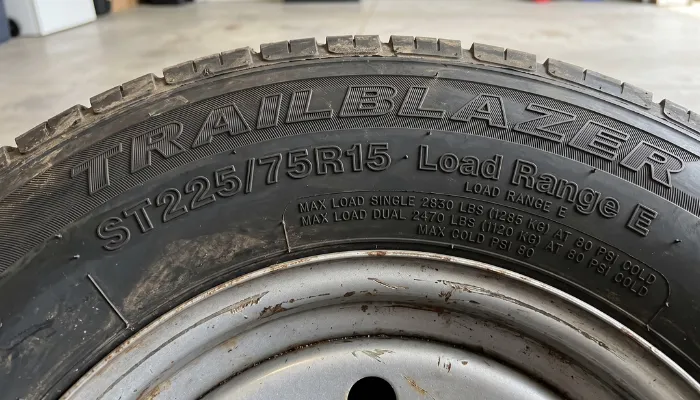
A massive debate always rages online: Do I inflate to the RV sticker or the tire sidewall? Because trailers are almost always loaded near their maximum capacity, most tire experts and veteran towers recommend inflating trailer tires to the Maximum Cold PSI stamped on the tire’s sidewall (e.g., 65 PSI or 80 PSI depending on the load range). This stiffens the sidewall, prevents dangerous flexing, and helps the tire run cooler. Always check the pressure in the morning before the sun hits the tires.
3. Upgrade Your Load Range
If your trailer came with Load Range C tires, consider upgrading to Load Range D or E when it is time for a replacement (ensure your rims are rated for the higher PSI). Going up a ply rating gives you a much stronger, thicker sidewall that is far more resistant to heat and road hazards.
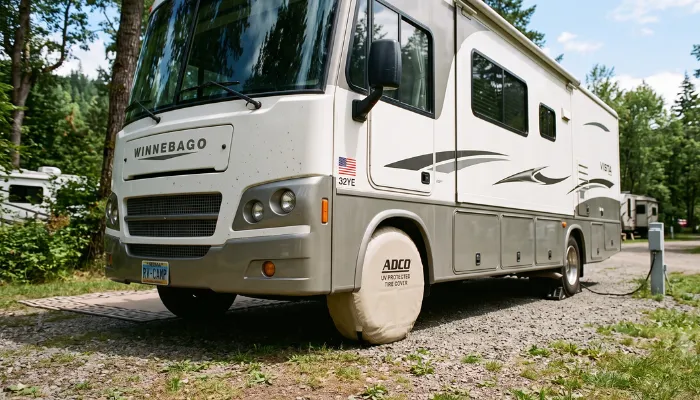
4. Use Tire Covers
When parking your RV for more than a few weeks, cover the tires. Blocking UV rays will significantly reduce dry rot and extend the structural integrity of the rubber.
Sizing and Replacements: Ditching the Budget Tires
If you have decided it is time to upgrade, knowing your size is key. The two most common travel trailer tire sizes in North America are the st205/75r15 and the slightly smaller st205/75r14.
Not sure if you need an st205/75r15 or a heavier load range for your camper? Use our exact fit tire finder tool at Tires Easy by entering your trailer’s details to easily find the safest matching tires in our online tire store
While it can be tempting to search for budget tires to save a few dollars, the RV world is one place where you get exactly what you pay for. When shopping at a local shop or browsing an online tire store, look for heavy-duty options from trusted manufacturers. Tires constructed with full nylon caps and heavy-duty steel belts will run significantly cooler in August heat than a bargain-bin alternative.
Conclusion: Don’t Let a Blowout Ruin Your Vacation
Understanding why do trailer tires blow out in the summer is the first and most important step toward preventing a highway disaster.
A summer road trip should be about making memories, not changing shredded rubber on the shoulder of a 100-degree highway while semi-trucks fly by. By understanding the devastating effects of heat, keeping your speed in check, maintaining the correct max cold PSI, and ditching those aging factory tires, you can tow with confidence.
Invest in a quality TPMS, respect the 5-year replacement rule, and enjoy a safe, blowout-free camping season this summer!
Don’t wait for a highway disaster to upgrade your RV’s footprint. Find your exact trailer tire size and check local availability today at Tires Easy, schedule your pre-trip installation, and travel with total peace of mind this summer.
FAQs
1. Why does my RV tire say “Cold PSI”?
“Cold PSI” refers to the tire pressure before the vehicle has been driven. Driving generates heat, which causes the air inside the tire to expand and the PSI to increase. Always measure and set your tire pressure in the morning before hitting the road. Never bleed air out of a hot tire.
2. Is it safe to drive 75 MPH if my trailer tires are rated for 65 MPH?
No. Exceeding the speed rating on an ST tire causes catastrophic heat buildup. The centrifugal force and internal friction will literally pull the tire apart. If you want to drive faster, you must invest in premium tires with an M (81 mph) or L (75 mph) speed rating, but towing at slower speeds is always safer.
3. Do I really need to replace my tires if they still have lots of tread?
Yes. Trailer tires rarely die from bald tread; they die from structural degradation. The rubber oxidizes, dries out, and loses its flexibility over time. Industry standard dictates replacing them every 4 to 5 years from the DOT manufacture date stamped on the side.
4. Can I put regular car or truck tires on my travel trailer?
Usually, no. Passenger (P) tires are designed for a smooth ride and have soft sidewalls, making them highly dangerous for a top-heavy trailer. Light Truck (LT) tires can sometimes be used on heavy 5th wheels, but Special Trailer (ST) tires are specifically engineered with stiff sidewalls to handle the heavy vertical loads and lateral swaying of a trailer.
5. What is the difference between an ST tire and an LT tire?
ST (Special Trailer) tires have stronger, stiffer sidewalls to reduce trailer sway and carry heavy loads. LT (Light Truck) tires are built for traction and steering on powered axles. ST tires should only ever be used on trailing axles, never on a passenger vehicle.