



Last Updated on July 13, 2026
The Ultimate Guide: Are All-Terrain Tires Good for Daily Driving?
Yes, modern all-terrain (A/T) tires can be good for daily driving, provided you choose the right type. However, they come with built-in compromises. Equipping your truck or SUV with A/T tires will typically reduce your fuel economy by 1 to 3 MPG due to increased weight and rolling resistance. You will also experience slightly more highway noise and a stiffer ride compared to standard highway or all-season tires. For drivers who spend 85% to 90% of their time on pavement and only off-road occasionally, choosing a “mild” P-Metric all-terrain tire is the best way to get the aggressive look without ruining your daily commute.
The All-Terrain Dilemma: Aggressive Looks vs. Daily Reality
You just bought a new truck or a capable SUV like a Toyota Tacoma or Ford Bronco. You walk out to your driveway, look at the factory highway tires, and think: These look like minivan tires. You want that rugged, aggressive, off-road aesthetic. You want to be ready for the trails.
So, you ask the ultimate question: Are all-terrain tires good for daily driving?
If you visit communities like r/Tacomaworld or r/overlanding, you will find thousands of drivers debating this exact topic. The reality in 2026 is that tire technology has advanced massively. You no longer have to choose between a tire that hums like a tractor on the highway and one that gets stuck in wet grass.
However, physics is still physics. All-terrain tires are designed to dig into dirt, gravel, and mud, which inherently makes them less efficient on smooth pavement. Before you spend $1,000 or more on a new set of aggressive rubber, you need to understand exactly how they will affect your highway noise, your MPG (miles per gallon), and your overall ride comfort.
Ready to upgrade your truck’s aesthetic without ruining your daily commute? Find our complete selection of premium All-Terrain tires at Tires Easy to find the perfect rugged look for your vehicle
How All-Terrain Tires Impact Your Daily Commute: The Big Three
When transitioning from standard highway terrain (H/T) or all-season tires to all-terrain tires, there are three primary areas where you will feel the difference on your daily drive to work.
1. The MPG Drop: Weight and Rolling Resistance
The number one complaint from drivers switching to A/T tires is the sudden drop in fuel economy. If you ask veteran drivers if all-terrain tires ruin gas mileage, the honest answer is yes, but the severity depends on what you buy.
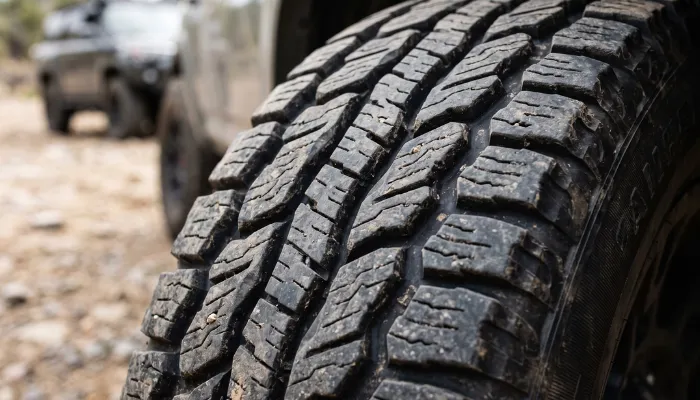
- Increased Rolling Resistance: A standard highway tire has continuous ribs of rubber that roll smoothly over the asphalt. An all-terrain tire features individual tread blocks with large gaps (voids) between them. These blocks squirm and flex as you drive, creating friction and heat. Your engine has to burn more gas to overcome this friction.
- Unsprung Weight: A/T tires have thicker sidewalls, deeper tread depth, and more rubber compound than factory tires. This adds physical weight to the tire. In automotive physics, adding “unsprung rotational mass” (weight at the wheels) is the fastest way to drastically reduce your MPG.
The Verdict on MPG: Expect a drop of 1 to 3 MPG when switching to a standard all-terrain tire. If you upgrade to a heavy-duty LT (Light Truck) A/T tire, you could lose up to 4 MPG.
2. Highway Noise: The Dreaded “Hum”
Are all-terrain tires loud? The answer changes depending on the age of the tire.
Tire manufacturers use computer modeling to “pitch sequence” the tread blocks on modern A/T tires. By making the blocks slightly different sizes, they cancel out sound frequencies. Because of this, brand-new all-terrain tires are shockingly quiet for the first 10,000 miles.
- The Wear Factor: As the tire wears down, those acoustic properties change. The tread blocks begin to wear unevenly (a process known as “cupping” or “heel-toe wear”). By the time your A/T tires have 25,000 miles on them, the gaps (void ratio) trap air against the pavement and release it rapidly, creating a distinct droning or humming sound at 70 MPH.
- Regular Rotations: To keep an A/T tire quiet for daily driving, you must rotate them religiously every 5,000 miles to ensure the tread blocks wear flat.
3. Treadwear and Ride Comfort
A/T tires are built to survive jagged rocks and sharp branches. To achieve this, the rubber compounds are often harder, and the sidewalls are reinforced.
- The Comfort Compromise: Stiffer sidewalls mean the tire absorbs less impact from potholes, speed bumps, and highway expansion joints. You will feel more vibrations in the steering wheel and the cabin.
- Wet Traction: While A/T tires are great in deep snow and mud, large tread blocks with fewer sipes (the tiny slits in the rubber) can actually perform worse on wet, slick pavement than standard highway tires.
The “85% On-Road” Rule: Do You Actually Need A/T Tires?
In a recent discussion within the r/tires community, a driver asked: ‘I do occasional off-roading like once a month to get to a campsite. Are all-terrain tires worth it?’
This is the perfect use case for the 85/15 Rule. If you spend 85% to 90% of your time driving on paved roads, commuting, running errands, or doing road trips, and only 10% to 15% of your time on dirt roads, you need to be very careful about your tire choice.
Many off-road enthusiasts will tell you a hard truth: A high-quality Highway Terrain (H/T) tire (like the Michelin Defender LTX M/S) will get you to 90% of the campsites, trailheads, and gravel roads in America without getting stuck, provided you have all-wheel drive or 4×4.
However, if you frequently encounter deep mud, sharp rocks, or unmaintained forest service roads, the puncture resistance of an A/T tire becomes essential. If you buy an A/T tire purely for the “aggressive aesthetic” but never leave the pavement, you are paying a high premium in gas and noise for a look.
P-Metric vs. LT (Light Truck): The Secret to Daily Driving A/Ts
If you have decided that you definitely want all-terrain tires for your daily driver, you must understand the difference between P-Metric and LT designations. This single choice will determine whether you love or hate your daily commute.
P-Metric All-Terrain Tires
These tires have a “P” in front of the size (e.g., P265/70R17) or no letter at all. They are engineered for passenger vehicles and light SUVs.
- Pros: They are lighter, have softer sidewalls, offer a much smoother ride, and minimize the MPG penalty.
- Cons: They have thinner sidewalls that are more susceptible to punctures on sharp rocks.
- Daily Driving Verdict: If you commute daily and only off-road casually, buy a P-Metric A/T tire.
LT (Light Truck) All-Terrain Tires
These tires have an “LT” in front of the size (e.g., LT265/70R17) and usually carry a Load Range E (10-ply rating).
- Pros: They are virtually indestructible off-road and can handle heavy towing payloads.
- Cons: They weigh 15 to 20 pounds more per tire than a P-Metric equivalent. They ride incredibly stiff and will drastically reduce your MPG.
- Daily Driving Verdict: Unless you drive a heavy-duty truck (like an F-250) or tow heavy trailers, avoid LT tires for a daily commuter.
Not sure which load rating your specific vehicle requires? Use our exact fit tire finder tool to easily filter between comfortable P-Metric commuters and heavy-duty LT off-road tires.
Summary Guide: Daily Driving Impacts of Tire Upgrades
To help you visualize the trade-offs, here is a quick reference guide on how upgrading from a factory highway tire to different types of All-Terrain tires affects your daily driving experience:
| Tire Type | Road Noise (At 70 MPH) | Fuel Economy (MPG Impact) | Ride Comfort | Best Use Case |
| Highway Terrain (H/T) | Very Quiet | Baseline (Maximum MPG) | Smooth / Plush | 99% Pavement, Rain, Light Gravel |
| Mild A/T (P-Metric) | Low to Moderate | -1 to -2 MPG | Slightly firmer | 85% Pavement, Fire Roads, Snow |
| Aggressive A/T (LT Load E) | Moderate to Loud | -2 to -4 MPG | Stiff / Harsh | Heavy Towing, Sharp Rocks, Overlanding |
| Mud Terrain (M/T) | Very Loud (Droning) | -3 to -5 MPG | Very Stiff / Vibrates | Deep Mud, Dedicated Off-Roading |
Top A/T Tire Recommendations for Daily Drivers
If you are looking for the “Goldilocks” tire, one that looks aggressive, handles dirt trails, but won’t punish you on your commute, the automotive community has crowned a few clear winners in the “Mild A/T” category.
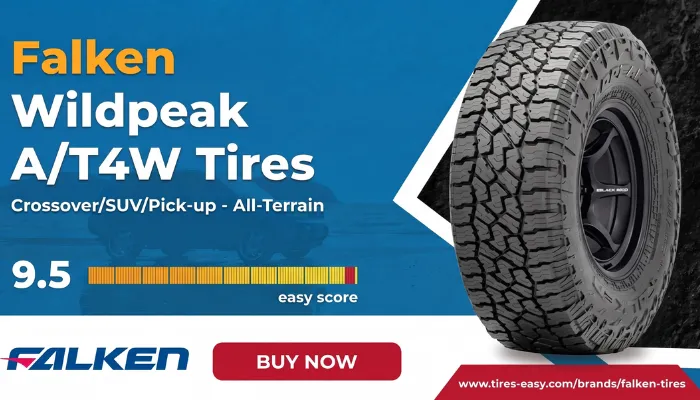
1. Falken Wildpeak A/T4W
Considered by many Tacoma and Overlanding communities as the best all-around compromise tire. It features an aggressive sidewall that looks fantastic, but the center tread blocks are tightly packed to keep highway noise to an absolute minimum. It also carries the 3-Peak Mountain Snowflake (3PMSF) rating for severe snow.
Key Benefits:
- Excellent Winter Performance: Certified for severe snow conditions with 3PMSF rating.
- Off-Road Durability: Reinforced sidewall construction for trail protection.
- Aggressive Aesthetics: Deep, rugged sidewall design that enhances vehicle appearance.
Want the ultimate daily-driving compromise? Check availability and pricing for the Falken Wildpeak A/T4W for your truck today
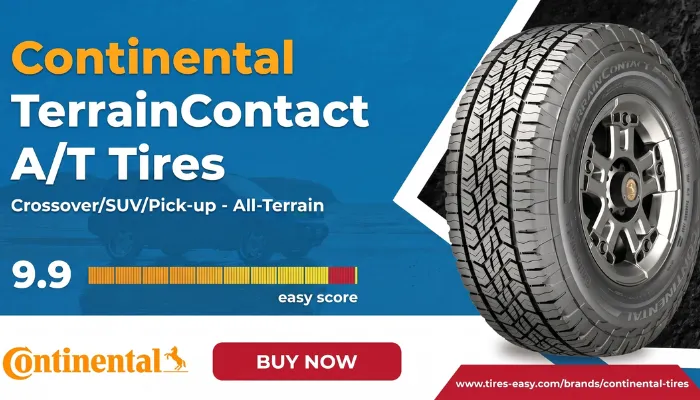
2. Continental TerrainContact A/T
If highway manners and wet-road safety are your top priorities, this is your tire. It does not look as aggressive as a Baja-style racing tire, but it is phenomenally quiet on the highway and offers better wet-braking distances than almost any other A/T on the market.
Key Benefits:
- Best-in-Class Wet Braking: Superior stopping power on slick, rain-covered pavement.
- Silence & Comfort: Advanced tread design that minimizes road drone during high-speed highway driving.
- Long-Lasting Tread: Engineered for even wear and high mileage, perfect for daily commuters.
Prioritizing safety in the rain? Explore the Continental TerrainContact A/T to get industry-leading wet traction and highway comfort
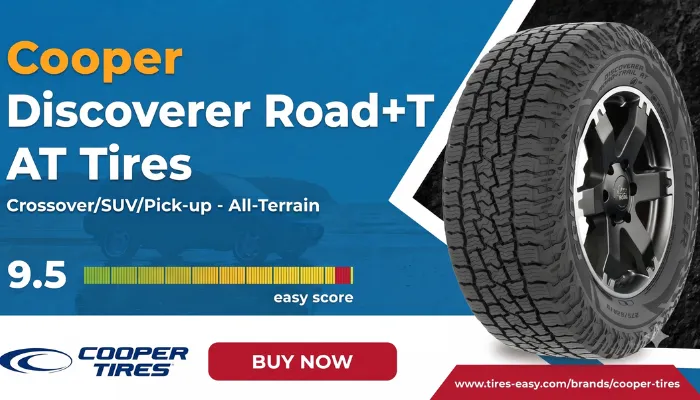
3. Cooper Discoverer Road+Trail AT
Designed specifically to replace the legendary AT3 4S, this tire was built exactly for the daily driver. It provides a comfortable ride, excellent treadwear, and just enough void ratio to get you through weekend dirt trails without humming on the highway Monday morning.
Key Benefits:
- Daily Commuter Comfort: Optimized for smooth, quiet performance on paved surfaces.
- Versatile Traction: Balanced tread pattern for both highway stability and light off-road grip.
- Reliable Longevity: Built for consistent treadwear over the life of the tire, reducing replacement frequency.
Looking for the perfect balance between weekend dirt trails and your Monday commute? Discover the Cooper Discoverer Road+Trail AT and upgrade your daily driver’s performance today.
Conclusion: Finding the Perfect Balance
So, are all-terrain tires good for daily driving? Ultimately, yes, as long as you keep your expectations grounded in reality. You cannot have a tire that looks like it belongs on a dedicated rock crawler but drives like a luxury sedan.
If you are honest with yourself about your driving habits and admit that you spend 85% of your time commuting, picking a P-Metric “mild” all-terrain tire is the smartest move you can make. You will suffer a minor hit to your MPG and perhaps a slight increase in road hum, but you will gain the aggressive aesthetic you want, enhanced durability, and the peace of mind knowing you can tackle that weekend dirt road without a second thought.
Don’t settle for boring highway rubber if you crave that off-road aesthetic. Find the perfect all-terrain tires for your exact vehicle a Tires Easy, secure the best price, and drive with total confidence on and off the pavement
FAQs
1. How much will my gas mileage drop with all-terrain tires?
On average, expect a drop of 1 to 3 MPG when switching from a highway tire to a P-Metric all-terrain tire. If you upgrade to a heavier, 10-ply LT all-terrain tire, you may see a drop of 3 to 4 MPG due to the heavy unsprung rotational mass.
2. Do all-terrain tires wear out faster on the highway?
Yes, slightly. Because the rubber compounds are formulated to resist chipping off-road, and the tread blocks are spaced further apart, the continuous heat of 75 MPH highway driving can cause them to wear slightly faster than a continuous-rib highway tire. However, premium A/Ts still offer 50,000 to 60,000-mile warranties.
3. Are all-terrain tires good in the rain?
It depends on the tire. Aggressive A/Ts with huge rubber blocks have less surface area touching the road and fewer sipes to evacuate water, making them slippery on wet pavement. “Mild” A/Ts from premium brands use silica-rich compounds and deep sipes that actually perform very well in the rain.
4. Can I use all-terrain tires in the snow?
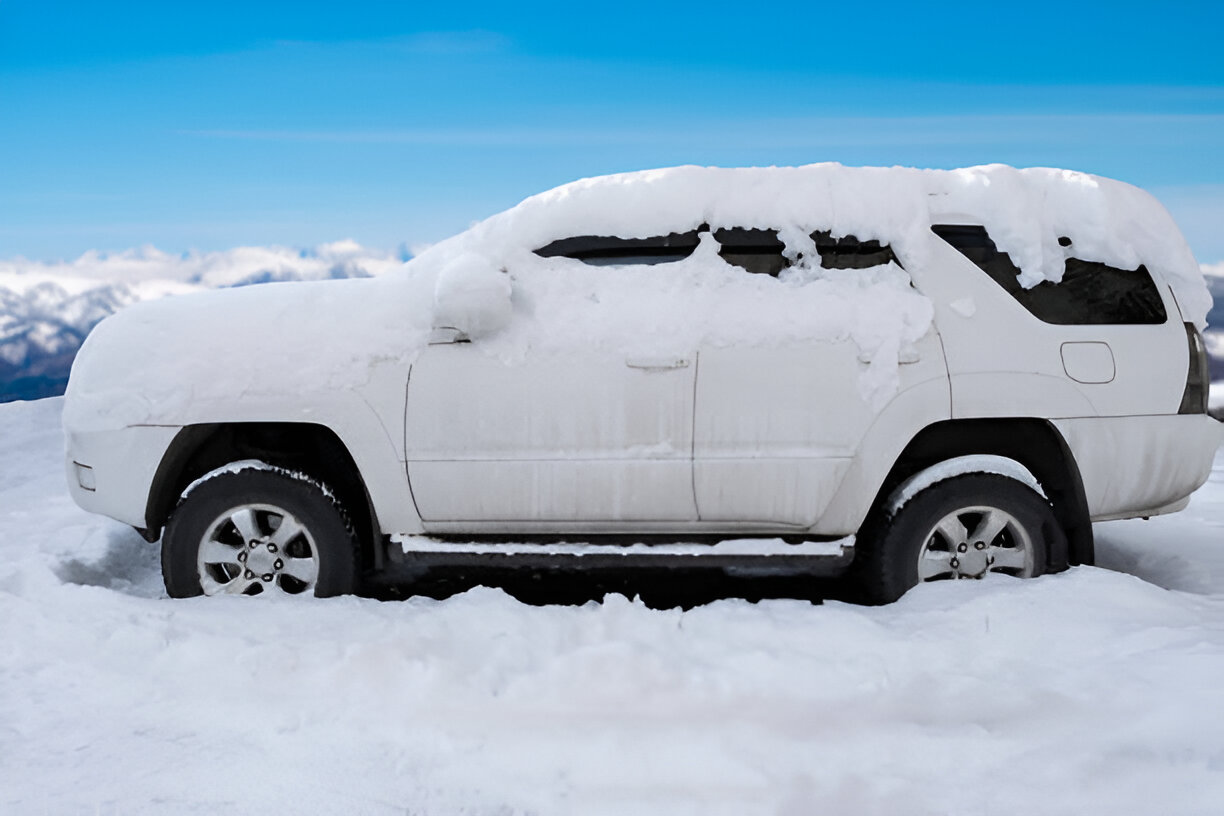
Yes, but look for the 3-Peak Mountain Snowflake (3PMSF) symbol on the sidewall. Not all A/T tires are rated for severe snow. Those with the 3PMSF rating (like the Falken Wildpeak) have specific rubber compounds that stay soft in freezing temperatures, making them excellent in winter conditions.
5. Should I buy Mud-Terrain (M/T) tires for my daily driver?
No. Mud-terrain tires are built for extreme off-roading. On the highway, they are incredibly loud, wear down very quickly on pavement, provide poor wet traction, and will significantly reduce your fuel economy.