



Last Updated on June 24, 2026
Winter tire laws affect drivers across the U.S., including M+S vs winter tires, tire chain laws, and studded snow tire regulations that are critical for safe winter driving. Knowing what’s legal in your region, and the difference between Mud and Snow (M+S) tires and true winter tires, helps you avoid fines and drive with confidence.
Here’s what this guide covers:
- Differences between M+S vs winter tires
- Winter tire laws and seasonal travel restrictions
- Tire chain laws and snow chain requirements
- Studded tire laws by state and seasonal rules
- Tips for staying safe and compliant during winter driving
Discover the Surprising Winter Tire Laws
New winter tire laws and travel restrictions are popping up in regions of the country prone to heavy snowfall and extreme winter weather. To stay safe and legally compliant when driving in these areas, it is essential to understand the different tire classifications and certifications that distinguish between all-season and winter tires.
These laws aim to improve winter travel safety and prevent travel on unsafe tires.
Still, everyone, including the people enforcing the regulations, can be confused by tire jargon.
Winter is a challenging time for drivers, and having the right tires can make all the difference in safety and control on the road.
But what exactly are M+S tires, and are they the same as winter tires?
This blog dissects the differences between M+S (Mud and Snow) tires and winter tires, helping you make informed choices for your winter driving needs. Plus, we’ll reveal some surprising winter tire laws that might catch you off guard. Let’s dive in!
Tire Classification
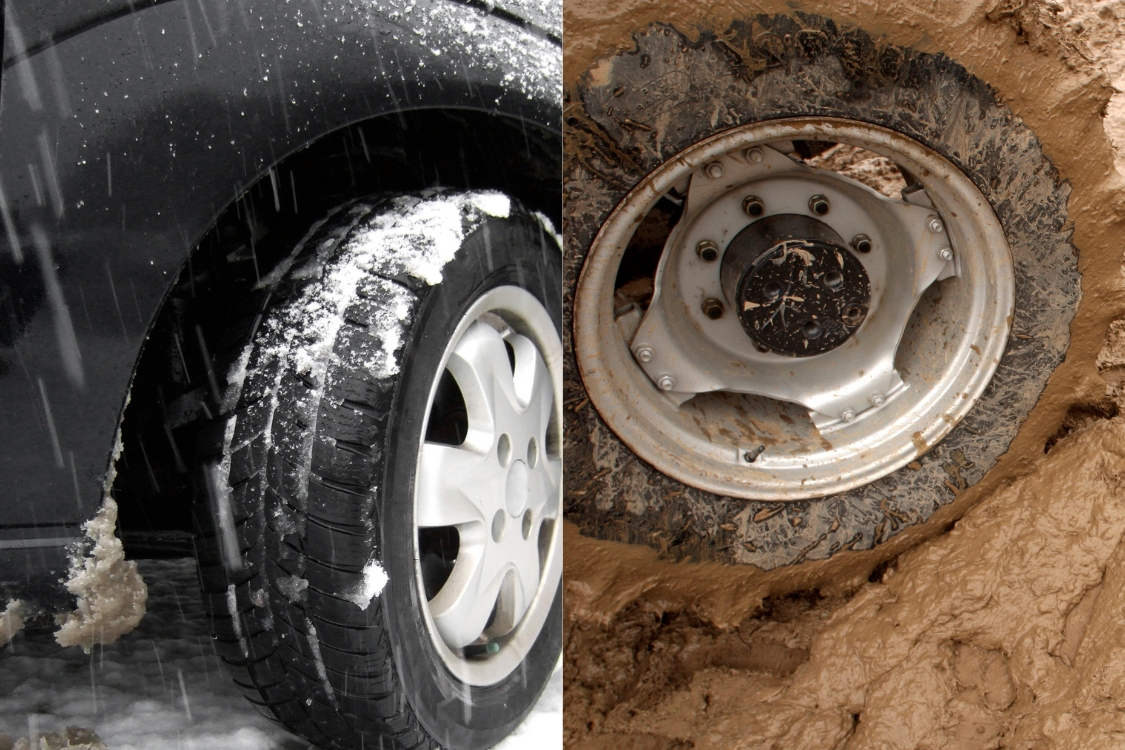
Tire manufacturers and retailers use general classifications to classify tire types. Terms like “all-season tires,” “all-weather tires,” “winter tires,” “summer tires,” and “rain tires” are examples of tire classifications. While tire manufacturers group their tire styles according to actual performance attributes, the groupings are arbitrary. One tire manufacturer may design a tire optimized for wet and dry conditions and call it a summer tire.
Another manufacturer could have a product with the same performance characteristics and market it as an “all-season tire.” There is no way to tell exactly how a tire will perform or how a tire manufacturer classified a particular model just by looking at the tread, sidewall, or name of the tire style. For this reason, law enforcement officers at roadside winter tire checks rely on additional information to differentiate tires intended for use on winter roads.
Tire Certifications and Markings
Over the years, the Department of Transportation (DOT) and the Rubber Manufacturers’ Association (RMA) have implemented certified testing and tire marking systems to help differentiate tires. Two standard tire marking methods for winter are the “M+S” marking and the “Three Peak Mountain Snowflake” symbol. A tire manufacturer is not obliged to submit their tires for testing, nor do they have to include these markings on the side of their tires.
For this reason, checking before you buy new tires is essential. You could buy a tire that is marketed as an all-season tire for year-round use, with perfect snow and ice traction, but without the “M+S” stamped somewhere on the sidewall, your tire may be deemed unsafe for travel on certain roads.
M+S Marking
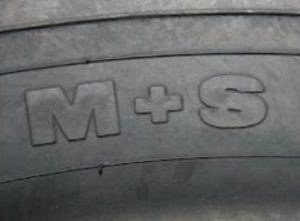
The M+S marking was introduced in the 1970s to distinguish tires with extra mud and snow traction from those with ribbed treads, which was common in that era.
For a tire to have the “M+S” grading and stamp on the sidewall, it had to have a particular style of block tread pattern and more traction capabilities. Today’s tire performance standards for this classification are pretty low, particularly for typical winter driving conditions like snow and ice.
However, the “M+S” certification system has become the benchmark to help the average tire buyer and law enforcement determine if a tire even has a basic level of snow traction.
Three Peak Mountain Snowflake
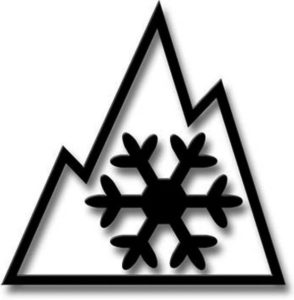
In the late 1990s, the RMA realized that updated standards were required to differentiate actual “winter tires” from standard “all-season tires.” The new testing parameters included more winter traction-specific testing, including a snow spin test.
Today, the Three Peak Mountain Snowflake on the side of a tire remains the best indicator that it has the good winter traction you would expect from a tire classified as a true “winter tire.”
While a few non-winter tires, like all-terrain light truck tires, pass the traction test and carry the Three Peak Mountain Snowflake symbol, most tires with this symbol are actual winter tires intended to be used only during the winter months.
Critical Differences Between M+S and Winter Tires
| Tread Design | Rubber Compound | Siping |
| Winter tires have intricate tread patterns with deep grooves and biting edges designed to dig into snow and ice. M+S tires have less aggressive tread patterns that may not perform as well in heavy winter conditions. | Winter tires use a softer rubber compound that remains pliable in cold temperatures, ensuring better grip. M+S tires typically have a firmer rubber compound. | Winter tires have dense siping, tiny slits in the tread, enhancing traction on icy roads. M+S tires have fewer sipes, which may limit their ice performance. |
Winter Tire Laws and Regulations in Your Area
What does this all mean for you? If you drive in an area with winter tire laws and travel regulations, you should first learn the local winter tire laws. Dedicated winter tires are always a good idea for maximum safety. Still, most winter travel-restricted roads will allow travel without winter tires if you have chains and your all-season tires are in good condition and are appropriately marked.
However, tires and winter travel regulations can vary from area to area, so it is best to research before setting out on a mountain pass or new route subject to heavy snowfall.
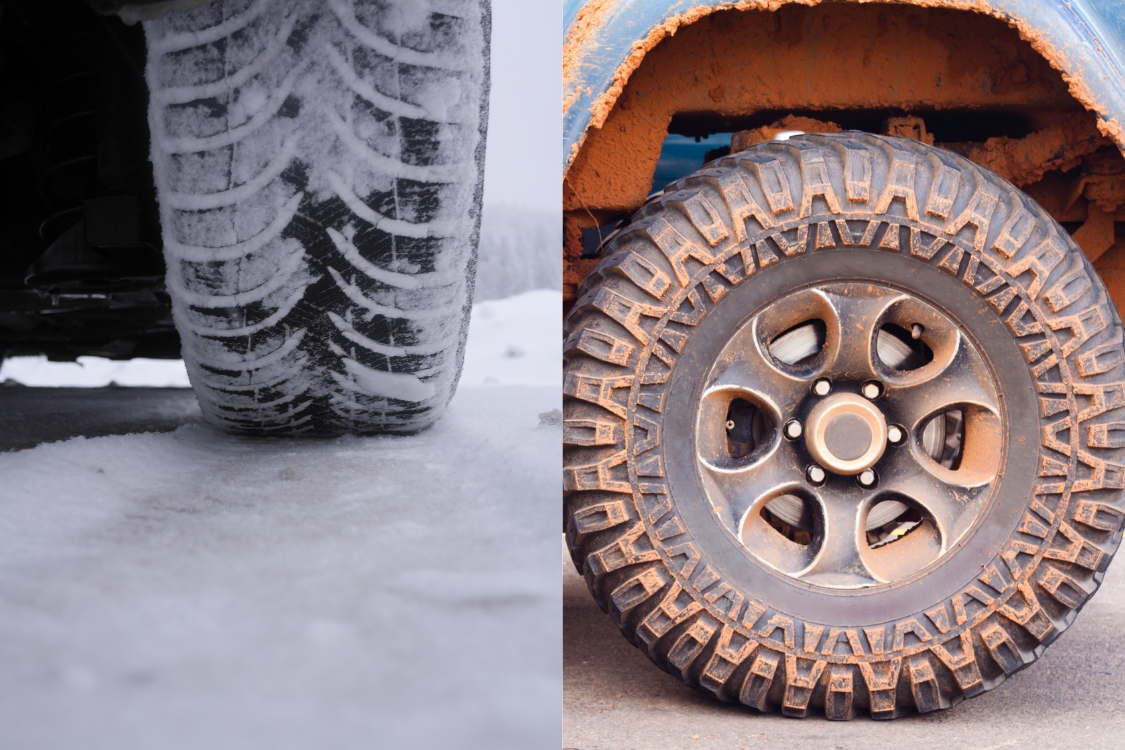
At the very least, you should check your all-season tires for the M+S symbol on the side. The marking can usually be found close to the bottom edge of the tire that attaches to the wheel, as shown on the left. A law enforcement officer at a roadside winter tire check will first look at the tread and the tire’s name.
If they don’t recognize it as a dedicated winter tire, the next thing they will look for is the Three Peak Mountain Snowflake or the M+S symbol. Many will also look at the condition of the tires. If the tread is too worn, you could be asked to turn it back or be required to pull over and install tire chains.
Tire Chain Laws by State in the U.S. (Quick Guide)
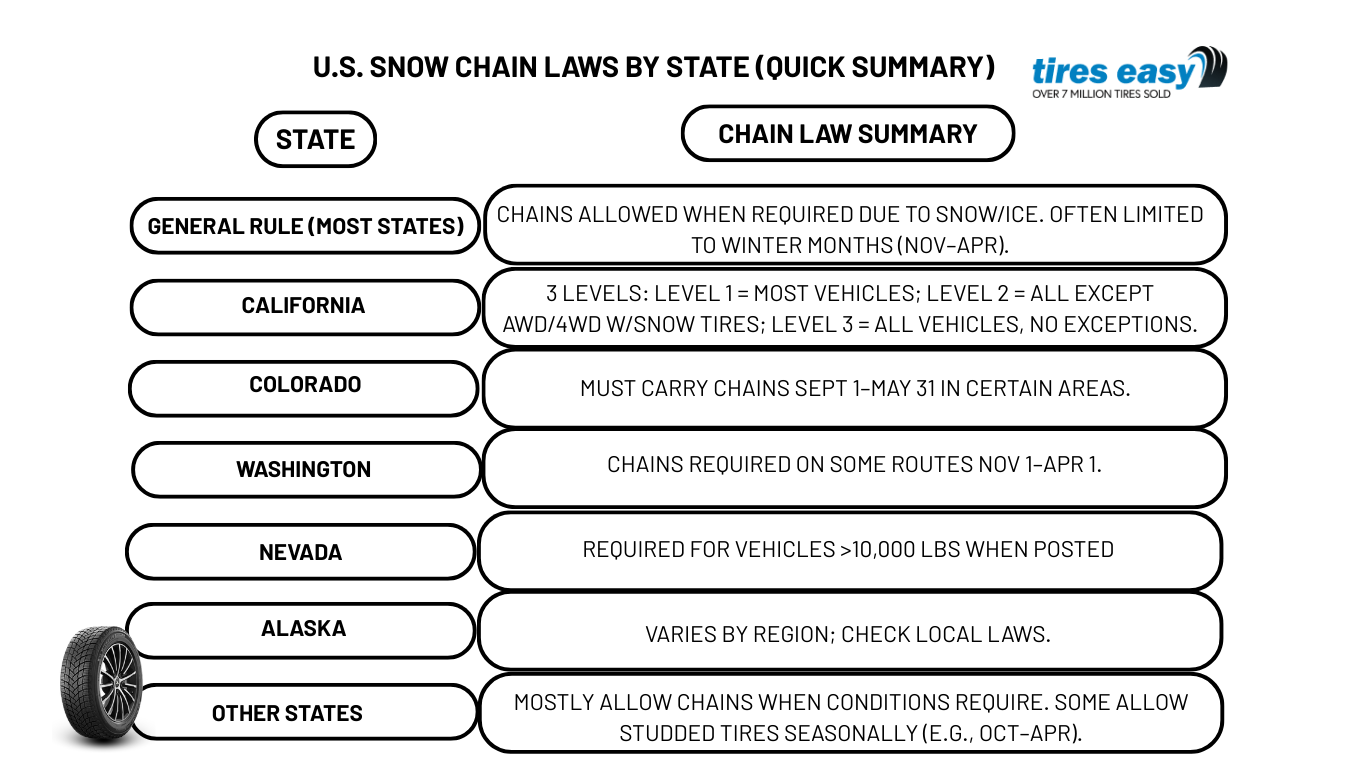
U.S. snow chain laws can vary significantly from state to state, making it important for drivers to know the specific requirements before traveling. The chart below provides a quick summary of some of the most common regulations, including general rules, seasonal requirements, and state-specific laws in states such as California, Colorado, Washington, Nevada, and Alaska. This overview makes it easier to understand when and where chains or studded tires are required, so you can stay safe and compliant during winter driving.
Studded Tire Laws by State and Seasonal Rules
Studded tires are regulated differently across the U.S., with most states allowing their use only during specific winter months to prevent road damage. Some states, like Colorado and Washington, allow studded tires only from October through April, while others may ban them entirely or limit their use by vehicle type.
According to the 2025-2026 North America Winter Forecast by OpenSnow, this upcoming snow season is expected to bring heavy snowfall and challenging driving conditions in several regions. This makes it even more important for drivers to understand the seasonal rules for studded tires and comply with state regulations.
Studded Tire Laws by State (Quick Reference):
- Colorado & Washington: Allowed seasonally, typically Oct to Apr
- California: Limited by weather conditions and signage.
- Alaska: Permitted in most regions with a longer seasonal window
- Southern states: Often prohibited due to lack of snow and potential road damage.
Winter Tire Laws: You Might Not Know
Now, onto the surprising winter tire laws that vary by location:
- Mandatory Winter Tires: Some regions require winter tires during specific months or under certain weather conditions. Violating these laws can result in fines.
- Winter Tire Symbols: Look for the three-peak mountain snowflake symbol on winter tires, indicating they meet the highest winter performance standards. In some areas, these symbols are a legal requirement.
- Chain Laws: You might need snow chains and winter tires during heavy snowfall in mountainous regions.
- Insurance Impact: Your insurance claim may be affected if you cause an accident during winter without proper tires.
Buying the Right Tires for Your Climate
If you are ready to drive safely, comply with winter tire laws, and avoid unnecessary delays at winter tire checkpoints, head to Tires-easy.com. Tires-easy.com currently has over 75 winter tire styles for cars or minivans and 50 winter tires for SUVs, CUVs, pickup trucks, and commercial vans.
The brands and styles of winter tires on www.tires-easy.com include the Nokian Hakkapeliitta (available with studs or without studs), Cooper Evolution Winter, Bridgestone Blizzak tire, Firestone Winterforce 2 tires, Goodyear Ultra Grip Winter, and the low-priced Federal Himalaya WS2. We have hundreds of options in all-season tires with the M+S marking at price levels to fit any budget.
Winter Driving Tips: Tire Safety and Legal Rules
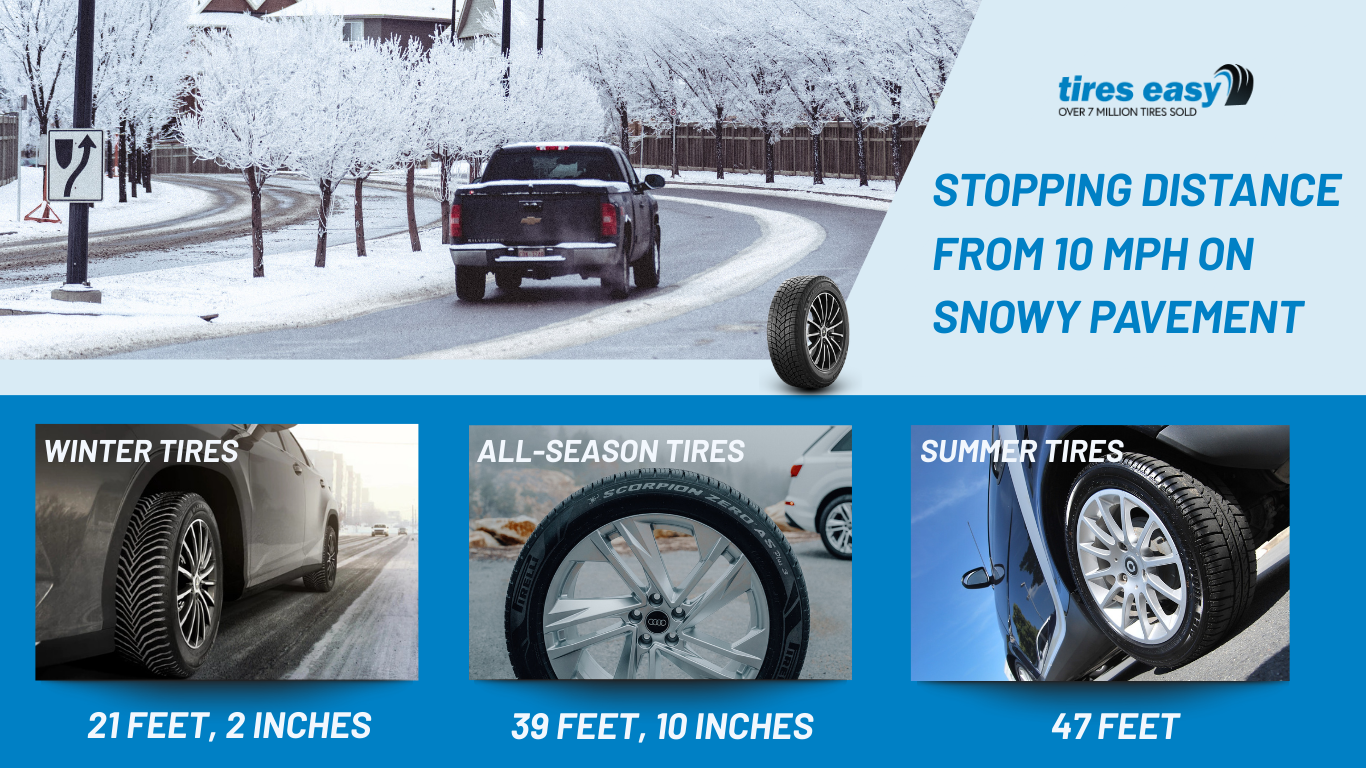
Driving in winter conditions requires more than just caution; it also means understanding and following tire laws to stay safe and compliant. The right tire choice can drastically reduce stopping distances and help you avoid fines for ignoring seasonal regulations.
The diagram below highlights how tire type affects stopping distance on snowy pavement: winter tires provide the shortest stopping distance, while all-season and summer tires take significantly longer to stop. This shows why winter tires are critical for both safety and compliance with local regulations.
Key tips for safe and legal winter driving:
- Use winter tires in snowy or icy conditions. They improve traction and reduce stopping distance compared to all-season or summer tires.
- Check local studded tire and snow chain laws. Each state has seasonal rules; using the wrong equipment can lead to fines.
- Carry tire chains when required. Some states mandate carrying chains even if you don’t plan to use them.
- Replace worn tires. Adequate tread depth is essential for grip on snow and ice.
- Plan for seasonal changes. Switch to winter tires before the first snow and remove them when temperatures warm up.
Conclusion
In conclusion, M+S tires and winter tires are not the same. While M+S tires offer versatility, winter tires provide specialized performance for cold and icy conditions. Understanding these distinctions and staying informed about winter tire laws in your area can help ensure a safe and smooth winter driving experience. So, before the snow falls, ensure your tires are up to the task!
Check out our wide selection of winter tires today, and get ready for a safer winter on the road
FAQs
Is M and S the same as winter tires?
M and S (Mud and Snow) designation on tires signifies they are suitable for various weather conditions, including mud and light snow. However, it doesn’t make them equivalent to dedicated winter tires designed for severe snow and ice conditions.
What is the difference between snow tires and MS tires?
Snow tires are specifically crafted for winter conditions, offering superior traction on snow and ice. M&S (Mud and Snow) tires are more versatile and perform well in various weather conditions, but may not excel in severe winter conditions.
Are M&S tires the same as all-weather tires?
M&S tires and all-weather tires are not the same. M&S tires are designed for mud and light snow and may perform adequately in all seasons. On the other hand, all-weather tires are designed to perform well in both summer and winter conditions, making them a more versatile choice.
What does M&S mean on tires?
M&S stands for Mud and Snow, indicating that the tires are designed to provide traction in various weather conditions, including muddy terrain and light snow. However, dedicated winter tires are recommended for optimal safety and performance in severe winter conditions.