


Last Updated on May 15, 2025
The Slate Truck: What We Know, What We Don’t, and What It Means for Tires
If you told me a few years ago that Amazon would be connected to a pickup truck, I probably would’ve laughed it off. I mean, sure, they’ve dabbled in delivery vans, bought some Rivian stock, and basically taken over the retail universe. But a full-on electric truck? That’s new territory.
It’s still early, but there’s enough out there now to start piecing together a picture of what this thing could be, and as someone who lives and breathes automotive parts (especially tires), I’ve been following this story closely. There’s a lot to unpack, and while some of it is still speculation, that just makes it more interesting.
A First Look at the Slate Truck
So, what exactly is it? At its core, the Slate Truck is a compact, fully electric pickup being developed by a startup called Slate Auto. It’s backed by none other than Jeff Bezos, and the whispers online suggest Amazon has a hand in it too, maybe in logistics, maybe more. Either way, this isn’t just another shiny EV with a massive price tag.
In fact, the opposite is true. The base version, called the Blank Slate, is about as bare-bones as it gets. We’re talking an unpainted gray plastic body (polypropylene, if you want to get technical), no stereo, no infotainment screen—just a phone mount and a rugged feel. It’s designed to be customizable, like a blank canvas for people who want to build it out to fit their needs. You want a fleet of work trucks? Go for it. Want to DIY a camper build? The platform’s modular enough to do that too.
The truck’s got a single motor on the rear axle, putting out around 200 horsepower. Not bad. Range-wise, you’re looking at two options: around 150 miles with the smaller battery, or about 240 with the bigger pack. That’s more than enough for daily driving, short trips, and light-duty hauling.
So… Has Anyone Actually Reviewed It?
Here’s where things get murky. The Slate Truck is still a prototype. No final models have been released. Some of the photos floating around online look half-CGI, and even the demo videos seem like they were shot during early development phases.
So, no—you won’t find any real-world reviews yet. No test drives. No side-by-sides with the Cybertruck or the F-150 Lightning. We’re in the dark on how it feels to drive, how it handles rough roads, or how sturdy the cabin is. Even the official range hasn’t been verified.
That said, there’s already a ton of excitement building. Why? Because it’s rare to see a truck aimed at simplicity and utility instead of tech overload. It’s not trying to be a spaceship. It’s trying to be useful. And affordable. That’s a refreshing change.
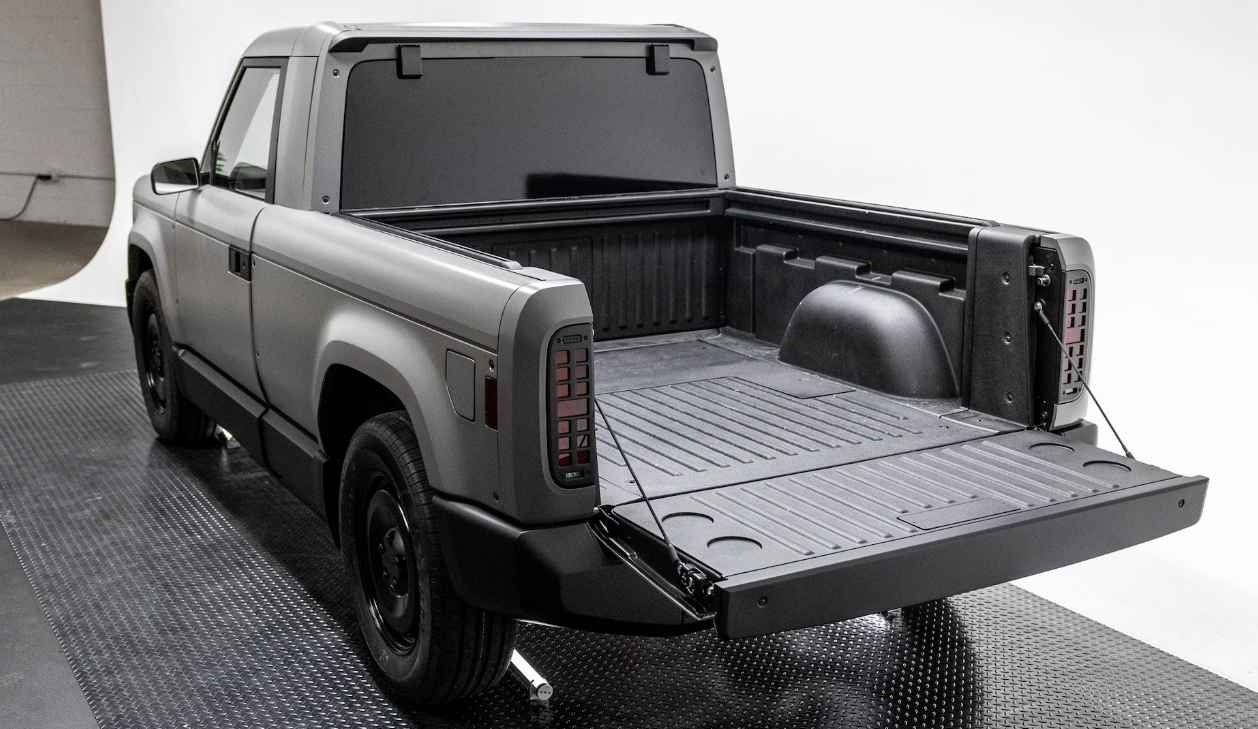
Screenshot from MotorTrend (used under Fair Use for commentary). All rights belong to MotorTrend.
Let’s Talk Tires
Alright—now we’re in my zone. While the company hasn’t released official tire specs yet (no surprise, given it’s still in prototype), we can make some pretty solid guesses based on what we do know. It’s rear-wheel drive, carries just over 1,400 pounds of payload, and has a slightly elevated ride height for light off-road use.
So, what kind of tire setup would make sense for this truck?
Think light truck (LT) tires, something that can balance on-road comfort with a bit of grit for unpaved roads and job site duties. Here are a few types I’d keep in mind if I were gearing up to drive one of these.
Michelin Defender LTX M/S
A classic all-season tire that’s quiet, efficient, and perfect for city or highway driving. These are already popular on light trucks and SUVs, and they’re EV-friendly thanks to low rolling resistance. If the Slate Truck is used as a delivery vehicle or urban commuter, these would be a smart match.
Falken Wildpeak A/T Trail
For folks who want to mix in some weekend adventures, this tire offers solid all-terrain capability without giving up comfort on pavement. It’s got a more aggressive tread than a typical highway tire, but it won’t beat you up with road noise. Could be a great option for contractors or outdoor enthusiasts.
Continental TerrainContact H/T
This one sits somewhere in between a rugged tire and a road-focused one. If you’re hauling tools Monday through Friday but still want a smooth ride to the grocery store on Sunday, it’s a great all-around choice.
Toyo Open Country A/T III
Built tough, period. These are for drivers who plan to push the Slate Truck a little harder—gravel roads, snow, mud, maybe even some trail duty. Not overkill, but definitely more serious than your average light-duty tire.
Something else to consider: EVs are rough on tires. That instant torque puts extra pressure on the rubber, especially at the driven wheels. So even though this isn’t a 500-horsepower truck, it’ll still need tires that are reinforced for EV loads. That means strong sidewalls, proper load ratings, and good wear resistance.
The Bigger Picture
To me, the Slate Truck feels like a signal. Not just that electric trucks are becoming more mainstream, but that there’s a hunger for vehicles that aren’t built for Instagram photoshoots.
This truck isn’t trying to impress with 0–60 times or a 17-inch center screen. It’s trying to do a job, and maybe do it for under $20,000. If it gets the basics right (payload, range, modularity), it could open up EV ownership to a whole new group of people: tradespeople, gig workers, budget-conscious families, rural drivers.
And when it does hit the road (hopefully sometime in 2026) we’ll be ready to help drivers get the most out of it. Whether that’s all-season tires for commuting, rugged A/Ts for backroads, or something specialized for a work fleet, the right tire setup is going to matter.
Because even the most advanced electric truck still has four rubber contact patches connecting it to the world. That’s where we come in.