



Last Updated on February 6, 2026
Tire DOT Date Code: How to Read It and Know Your Tire’s Age
The DOT number is a unique identifier found on all tires sold in the United States and is a requirement enforced by the U.S. Department of Transportation. It verifies the tire meets federal safety standards and contains important manufacturing details such as plant code, tire size code, and production date. The tire date code is the last part of this DOT number.
What Is the Tire Date Code?
The tire date code is a four-digit number found on the sidewall of a tire, immediately following the letters “DOT”. It reveals the week and year your tire was manufactured.
- The first two digits indicate the week of the year (01 to 52).
- The last two digits show the year (e.g., “2519” means the 25th week of 2019).
Knowing how to read this code is essential for tire safety, since age can affect performance, even if the tread still looks fine.
4 Essential Functions of a Tire’s DOT Number for Safety and Quality
- Traceability: Helps track tires in case of recalls, enabling manufacturers to identify and remove defective batches quickly
- Age Identification: Reveals the exact production date, essential for assessing tire safety since rubber degrades over time.
- Quality Assurance: Confirms the tire meets all federal safety standards set by the NHTSA.
- Informed Decisions: Empowers buyers to choose tires that meet safety requirements and avoid purchasing older stock.
Historical Background of the DOT Tire Code
- 1966 – Safety Legislation: The U.S. Congress passed the National Traffic and Motor Vehicle Safety Act, setting nationwide vehicle safety laws
- Early 1970s – Code Introduction: The DOT number was created to ensure all tires sold in the U.S. met strict federal safety standards.
- Safety Response: The code addressed tire failure concerns by enabling recalls, tracking tire batches, and improving overall tire quality control.
How to Find and Interpret the Tire Date Code
Locate the DOT Code
Every tire legally sold in the U.S. includes a Department of Transportation (DOT) code on its sidewall. This code confirms that the tire meets DOT and NHTSA safety standards and includes:
- Tire Size Code: This portion indicates the tire size based on the manufacturer’s specifications
- Manufacturer’s Unique Code: This may vary in length. The manufacturer uses it to encode information such as the type of tire, its intended use, and other specific characteristics.
- Production Date: The last four digits represent the week and year the tire was manufactured. For example, “3219” would indicate the tire was made in the 32nd week of 2019.
- Manufacturer’s Identification: The first two or three letters or numbers represent the manufacturing plant where the tire was produced.
Case Studies: Real-Life Examples
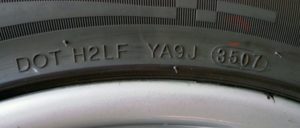
These final four numbers make up the tire date code. You’ll typically find them grouped together and often enclosed in an oval shape. To illustrate how the DOT code works in practice, let’s consider a couple of real-life examples:
Example:
A code ending in 3520 means the tire was made in the 35th week of 2020.
Example 1: Tires Made Before 2000
Older tires used a three-digit code where:
- The first two digits = week
- The last digit = year within the decade (e.g., “228” = 22nd week of 1998 or 1988). These tires are now too old for safe use and should be replaced.
Example 2: DOT 6BHL LMLR 2516
- 6BHL: Manufacturer’s plant code
- LMLR: Tire size and manufacturer’s unique code
- 2516: Manufactured during the 25th week of 2016
Example 3: DOT A9RK 4DEP 1217
- A9RK: Plant code where the tire was made
- 4DEP: Tire size and unique characteristics
- 1217: Production date, indicating the 12th week of 2017
Why Tire Age Matters
Tires have a limited lifespan due to natural rubber degradation. Even if they appear to have enough tread, they can:
- Dry out and crack
- Lose flexibility
- Be more prone to blowouts
That’s why most manufacturers recommend replacing tires every 6 to 10 years, regardless of how much they’ve been used.
How Tires Easy Handles Tire Age
We take tire age seriously. Here’s how we manage DOT codes at Tires Easy:
- We inspect and track DOT codes for all tire shipments
- We rotate inventory frequently to ensure you receive fresh, road-ready tires
Keeping track of your tires’ age helps prevent premature wear and unexpected repair costs — and ensures peace of mind every time you drive.
Decoding the Numbers
Imagine a DOT Date Code reading ‘2321’. The first two numbers, ’23’, indicate the week of manufacture, while the last two numbers, ’21’, represent the year. Thus, this tire was made in the 23rd week of 2021.
Where to Find the DOT Code on the Tire
It’s not always easy to find the tire DOT code. While all tires sold in the U.S. must have this code, there aren’t regulations on where the manufacturer has to place the information, so you may need to look at multiple sides of your tires before finding the numbers. However, the identification information is usually on the inner sidewall of tires.
- Sidewall Inspection: Look for a sequence of letters and numbers starting with “DOT.” This is your tire’s unique identification code.
- Positioning: The DOT code often appears in the bottom sidewall area around the tire’s rim. It could be on the inside sidewall, so look underneath your vehicle or move the steering wheel completely to reveal the inner side.
- Visibility: On some tires, the code is slightly raised or embossed, making it easier to identify if you run your fingers over the surface.
Tires-Easy Tire Age Warranty
At Tires Easy, we believe the tire warranty should begin from the date of purchase, not the DOT Code. If you purchase new tires today, and the DOT Code was a year ago, your warranty will still begin on the purchase date, not the tire’s manufacture date.
If, for any reason, you are uncomfortable with the age of your tires after looking at the DOT Date code, please call us, and we can quickly provide you with a return under our 45-day return policy.
Why Should I Be Concerned About the DOT Date Code?
Just because you buy “new” tires doesn’t mean they were made recently. Tires can take a while to reach tire retailers after being shipped from the manufacturer. Checking your tires’ DOT Date Code will tell you when they were made and how long they may have been stored. It is essential to know that tires are often good for months or years at a time, so your tire’s DOT code might not be in the same year you bought the tires, and that’s not a concern.
At Tires Easy, we take tire protection VERY seriously. Once the tires reach us, they are moved into Tires Easy’s industrial tire warehouses to ensure proper storage and prevent exposure to seasonal weather conditions. Our storage locations are fantastic, climate-controlled, and dry, preventing premature aging or damage.
Poor storage conditions can rapidly accelerate tire aging, so you should be sure the tires you purchase have been properly stored.
Why is the DOT Date Code Important?
- Safety First: Tires degrade over time. Even if they look in good condition, the rubber can weaken, making them more susceptible to failure. Knowing the age helps in assessing their reliability.
- Maximizing Value: The DOT Date Code ensures you’re not getting old stock when purchasing new tires. Tires sitting on shelves for extended periods may not offer the best performance.
- Warranty Claims: Some tire warranties are based on the purchase date, while others consider the manufacture date. The DOT Date Code can aid in any potential warranty claims.
Recalls and the DOT Number: What You Need to Know
The DOT number isn’t just about determining a tire’s age, it’s also a powerful tool for tracking and responding to safety recalls. This section explains its role in tracking recalls, how consumers can determine if their tires are affected, and how it holds manufacturers accountable for tire safety.
- Tracking Recalls: Each DOT number is unique to a specific batch of tires. If a manufacturer identifies a defect or safety issue, this code makes it possible to pinpoint exactly which tires are affected.
- Responding to Recalls: In a recall, the DOT number allows customers to quickly assess whether their tires are affected and require replacement or inspection. Visit the NHTSA recall search tool or your tire manufacturer’s website, enter your DOT number, and follow any inspection or replacement instructions provided.
- Manufacturer Accountability: The DOT number provides traceability, keeping producers accountable for the quality and safety of their tires and promoting increased standards in tire production.
How Old is Too Old?
Various industry associations worldwide agree that tires have a helpful service life of six to ten years. As technology changes, there are more materials and combinations of compounds to extend tire life and wear. If you’re not fully happy with the DOT number or the tires you purchased, just get in touch with our Tires Easy support team. We’ll arrange a hassle-free tire return and guide you in selecting the best replacement tires for your vehicle. At Tires Easy, our main focus is your satisfaction and peace of mind every time you drive.
Considering the average driver travels 15,000 miles yearly, most tires must be replaced in 4 years. If your tires were a few years old when purchasing, you would still be well within the accepted tire age range. This is especially true if the tires receive the proper care and maintenance throughout their lifetime.
You must replace your tires when the tread depth falls below 1.6 mm. Additionally, changing summer tires’ tread depth to 3 mm and winter tires’ tread depth to 4 mm is recommended. This keeps your tires at optimal levels of safety.
When your tires reach seven years of age, we recommend that you consider replacing them. Even if the tires look new, it is best to have them inspected by a professional tire installer so they can adequately advise on the safety of the tires moving forward. Spare tires should be checked and replaced as well.
No matter how old the tires are when you buy them, the most important aspect of tire safety is regular maintenance and inspection, according to the Rubber Manufacturers’ Association of America and the Tire & Rubber Association of Canada.
“Since service and storage conditions vary widely, accurately predicting the service life of any specific tire based on calendar age is impossible.”
For this reason, there is no specific limitation on the tire’s age when it is sold based on its DOT Code.
How Often Should I Check the DOT Date Code?
It’s wise to inspect the DOT Date Code:
- When purchasing new tires.
- During routine vehicle maintenance or tire rotation.
- If you suspect your tires are aging and might need replacement.
How the DOT Number Impacts You as a Driver
The DOT number on your tires is more than just a regulatory requirement; it impacts driving and vehicle maintenance, and understanding how this number affects a driver is crucial for safety, legal compliance, and practical vehicle upkeep.
- Regulatory Compliance: In the U.S., all tires must meet DOT safety standards. Driving with tires that don’t comply can result in fines, tickets, or other legal penalties.
- Insurance Claims: After an accident, insurers may check tire condition and age. Tires that are excessively old or missing a visible DOT number can jeopardize your claim, potentially leading to reduced payouts or denial.
Common Misconceptions About DOT Code Tire Age
1. Regarding the DOT Date Code, some might assume that the number stated when the tire was approved. On the contrary, the DOT symbol indicates that the Department of Transportation supports the tire to be legally used on the road. The Date Code is when the tire was manufactured (not when it was approved).
2. You might also have heard that you should only buy tires with a DOT code within the current year. As we mentioned earlier, this is often not the case with many tires simply because it takes time for the tires to reach the United States from the manufacturer.
As long as the tires have been stored properly, they will be in excellent condition, even if the DOT Date code is a few years old.

Proper Storage Increases the Life of the Tire
When stored properly and protected from the elements, tires age quite slowly. The Rubber Manufacturers Association has said there’s no way to put a date on when tires actually “expire.” There are too many factors that impact the actual age of a tire.
To help prolong the life of a tire, tire retailers will:
- Protect the tires from UV rays or excessively high temperatures.
- Keep the tires cool and dry to prevent deterioration.
- Eradicate moisture or humidity that could compromise the tires.
- Prevent tires from freezing when temperatures drop.
While these are the main contributors to excessive tire aging, it would still take years of exposure in the hottest, wettest, and driest climates for the first signs of tire aging to appear. Tires are durable, and if they show signs of damage within the first few years, it’s a sign of poor quality.
Whitening of the rubber and shallow hairline cracks in the upper or lower sidewall may indicate UV and heat damage, but these symptoms aren’t common issues in new tires.

Tips for Prolonging Tire Life
Navigating the world of tires can seem tricky, but it becomes a smooth ride when you’re armed with the proper knowledge. The DOT Date Code is crucial information stamped on every tire. Understanding this code and how to care for your tires can be a game-changer. Let’s break it down.
1. What’s the DOT Date Code Anyway?
The DOT Date Code is a small set of numbers at the end of your tire’s more extended DOT code. This code is about dates – it tells you when your tire was made. For example, if you see ‘2321’, the tire was manufactured in the 23rd week of 2021. Why’s that important? Like all things, tires age, and knowing their “birthday” helps you understand if they’re fresh or nearing the end of their best performance.
2. The Importance of Fresh Tires
While tires might look sturdy, they can age and weaken over time. A tire sitting on a shelf for years might not be as safe or perform as well as a newer one. So, when shopping for tires, a recent DOT Date Code ensures you’re truly getting the best for your vehicle.
3. Safety Checks with the DOT Date Code
Have you ever heard of recalls? Sometimes, specific batches of products, including tires, might have issues. If there’s ever a recall on your tire, the DOT Date Code helps identify if your tire belongs to that problematic batch.
4. Boosting Your Tire’s Life: Tire Care Tips
Apart from the DOT Date Code, there are simple ways to ensure your tires last longer:
- Regular Checks: Make it a habit to inspect your tires visually. Look out for any cuts, bulges, or anything that seems off.
- Pressure Matters: Ensure your tires are always inflated to the recommended pressure. This avoids unnecessary wear and can even save on fuel.
- Rotate Regularly: This means changing the position of your tires. For example, moving the front ones to the back and vice versa. It helps in even wear, ensuring they all last longer together.
5. Using the DOT Date Code for Warranties
Regarding warranties, some brands base their timeframes on purchase dates, while others might look at the manufacture date. Knowing how to read the DOT Date Code ensures you have the necessary information if a warranty situation arises.
The DOT Date Code is more than just numbers on your tire – it’s a gateway to understanding its age, ensuring safety, and making informed choices. Pair this knowledge with regular tire care, and you’re on your way to safer, longer-lasting drives. Safe travels!
Looking Ahead: The Future of the DOT Number
As tire technology evolves, the DOT number may also advance. Smart tire innovations, such as built-in sensors that monitor pressure, temperature, and wear in real time, could make tire tracking more dynamic and precise.
Sustainability efforts, including new eco-friendly materials and longer-lasting compounds, may also be reflected in future DOT codes. As regulations adapt to these innovations, the DOT number will remain a critical tool for ensuring tire safety in an ever-changing automotive landscape.
Conclusion
The DOT Date Code, imprinted on every tire’s sidewall, serves as a clear testament to transparency and safety standards in the tire industry. Acting as a tire’s “birth certificate,” it offers consumers invaluable information about a tire’s age, ensuring they can make informed decisions regarding tire purchases, maintenance, and replacements. This small yet crucial set of numbers ensures that the tire industry remains accountable and consumers remain informed, fostering trust and ensuring road safety for everyone.
The DOT Date Code is a small but mighty tool in your tire knowledge arsenal. By understanding and regularly checking this code, you’re ensuring a smoother ride and prioritizing the safety of you and your loved ones.
Ready to make a wise and informed tire choice?
Find the perfect, age-appropriate tires for your vehicle at Tires Easy. Ensure your journey’s safety and efficiency – Buy Now.
If you have any questions about your tire’s DOT Code or age, contact us and let us assist you!
FAQs
Do tires get stiff with age?
The rubber gets hard over time as the tire loses its elasticity. This happens regardless of how much you use your tires over the years.
Is there a firm date to replace my tires?
Every tire has a birthday; many will not be sold seven years later. However, since some tires don’t technically become unsafe until a decade after they’re produced, the best advice is to have your tires checked by a professional to ensure they are safe for continued driving.
How do you read a DOT Date Code?
The DOT Date Code is typically a three or 4-digit number found at the end of the DOT code on a tire. This code reveals the week and year the tire was manufactured. For a 4-digit code, the first two numbers represent the week, while the last two represent the year. For instance, ‘2321’ indicates the tire was made in the 23rd week of 2021.
What is a 3-digit DOT Date Code?
A 3-digit DOT Date Code was used on tires manufactured before the year 2000. The first two digits still represent the week of manufacture, but the last digit refers to the previous year of the decade. For instance, ‘238’ would mean the tire was made in the 23rd week of the 8th year of a decade (likely 1998). However, this method could be ambiguous, so from 2000 onward, a 4-digit code has been used to eliminate confusion.
How do I find my DOT Code?
The DOT code can be found on the sidewall of every tire. It usually starts with the letter “DOT,” followed by characters representing details about the tire and its manufacturing. The code’s last 3 or 4 digits (depending on the tire’s age) represent the DOT Date Code, indicating the tire’s manufacturing date.
What does the DOT code stand for?
“DOT” stands for the Department of Transportation. The DOT code on tires signifies that they meet all federal standards set by the U.S. Department of Transportation and provides information about the manufacturer, brand, and the date it was made, among other things.
What do the dots on tires mean?
The colored dots on new tires are quality control markers used by manufacturers. They indicate the lightest point of the tire or the highest point of radial runout. These dots assist technicians in balancing and correctly mounting the tire on a wheel.