



Last Updated on July 7, 2026
Why Choosing the Right Trailer Tire Matters
Despite looking similar to passenger car, SUV, and truck tires, trailer tires have vastly different characteristics and construction requirements. A high-quality trailer tire is crucial for safety, stability, and longevity, as it is specifically designed to handle heavy loads, resist heat buildup, and prevent sway during towing.
If you want to tow safely, you need precision and a dependable set of rubber. This guide covers the critical differences in trailer tire construction, how to read load ratings, and our top heavy-duty picks for 2026.

The Difference Between Trailer And Passenger Car Tires
You should never put standard passenger tires on a trailer. Trailer tires (marked with “ST” for Special Trailer) are built for straight-line towing rather than high-speed cornering. The main differences include:
- Stronger Sidewalls: ST tires feature highly reinforced sidewalls to prevent trailer sway and improve stability under massive vertical loads.
- Higher Load Index: They are engineered with heavy-duty materials to carry significantly more weight than a passenger car tire of the same size.
- Less Tread Flex: Trailer tire treads do not flex as much as car tires. This reduces rolling resistance and heat buildup, preventing premature wear and catastrophic highway blowouts.
What Are The Two Main Types Of Trailer Tires?
Currently, you will find two main trailer tire types on the market – Radial and Bias Ply.
Radial trailer tires are constructed similarly to passenger car tires and used for lighter trailers. They perform best on highway use and long-distance towing. The radial trailer tires have more flexible sidewalls for a smoother ride. Those who do a lot of towing know that radial tires are commonly found on boat or car trailers, travel trailers, etc. Also, radial trailer tires are known for longer tread life and better fuel efficiency.
Bias-ply trailer tires have traditional construction, which is far better suited for heavier loads. They have stronger and more rigid sidewalls, a more aggressive tread pattern for off-road use and difficult terrains, and chunkier tread blocks that can endure punctures and damage. Bias-ply trailer tires are used for heavy trailers, construction machinery, big farm trailers, etc.
Quick Comparison: Radial vs. Bias Ply Trailer Tires
| Feature | Radial Trailer Tires | Bias Ply Trailer Tires |
| Construction | Steel belts running at 90-degree angles | Crisscrossing nylon/polyester layers |
| Best Application | Long-distance highway towing | Heavy agricultural, off-road, & construction |
| Tread Life & Fuel | Longer tread life, better fuel efficiency | Shorter highway life, high rolling resistance |
| Sidewalls | Flexible for a smoother ride | Extremely rigid to endure punctures |
Decoding Load Ranges and Speed Ratings
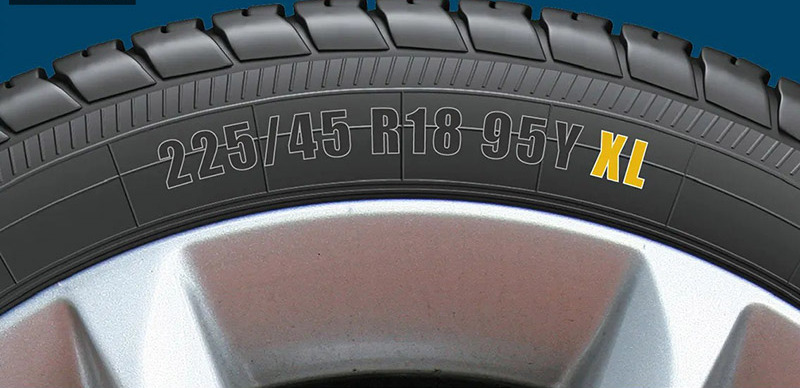
The tire load rating (or index) is a numerical code associated with the maximum load a tire can carry at the speed indicated by its speed symbol under specific conditions. It is a critical specification that ensures the tire can support the vehicle’s weight and any additional load without compromising safety. The load rating is typically found on the tire sidewall.
Besides the load rating, the trailer tires are usually marked by ply rating and are mostly connected to bias ply trailer tires. The ply rating shows the ruggedness of the tire and how durable the construction is.
The importance of the Load Range and Ply Ratings
- Load Range B (4-ply) – Light-duty trailers
- Load Range C (6-ply) – Medium-duty trailers
- Load Range D (8-ply) – Heavy-duty trailers
- Load Range E (10-ply) – Extra heavy-duty trailers
Determining the exact Gross Vehicle Weight Rating (GVWR) is easy but crucial for safe towing. Just find the GVWR figure for your vehicle, and then make sure that you have tires with a combined load capacity that exceeds that weight.
Speed Ratings
Most trailer tires are designed for speeds between 65 mph and 75 mph. Exceeding the speed rating can lead to excessive heat buildup and tire failure. We urge you to always drive under the limit and respect the local laws and road conditions.
Standard trailer tire speed ratings:
- L (75 mph) – Most standard trailer tires
- M (81 mph) – High-speed radial trailer tires
- N (87 mph) – Premium trailer tires for heavy loads
Best Trailer Tires For Heavy Loads In 2026
1) Goodyear Endurance
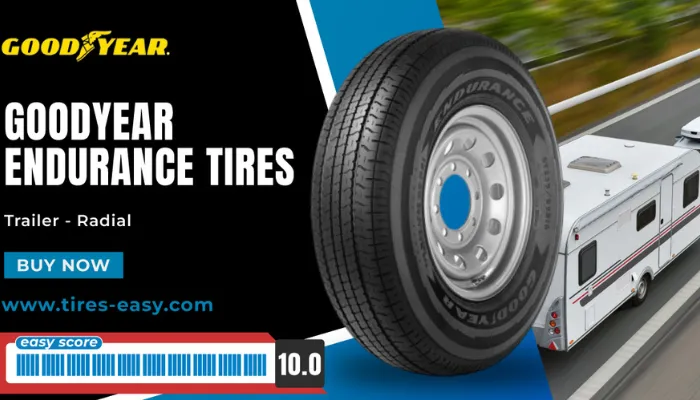
The Goodyear Endurance is a premium radial trailer tire designed for maximum durability and highway stability. Its scaffold guard is molded directly into the sidewall to resist damage from curbs. Upgrade your travel trailer or fifth-wheel with premium highway stability and maximum towing durability. Check current pricing for the Goodyear Endurance at Tires Easy.
Features:
- Rounded profile to cushion the trailer’s ride.
- Symmetric tread design with closely spaced ribs for straight tracking and dependable highway stability.
- Twin steel belts with two-ply nylon reinforcement to stabilize the tread, increasing traction and durability.
- Polyester cord body to help smooth out the trailer’s ride.
- A scaffold guard is molded into the sidewall to resist damage from contact with curbs.
Specifications:
- Sizes Available: ST205/75R14, ST215/75R14, ST205/75R15, ST225/75R15, ST235/80R16, ST235/85R16, ST255/85R16.
- Load Range: D and E, depending on size.
- Speed Rating: N (87 mph).
- Tread Depth: 8/32″.
- Max Load Capacity: Varies by size;
- Price: From $175 per tire, depending on size.
2) Carlisle Radial Trail HD
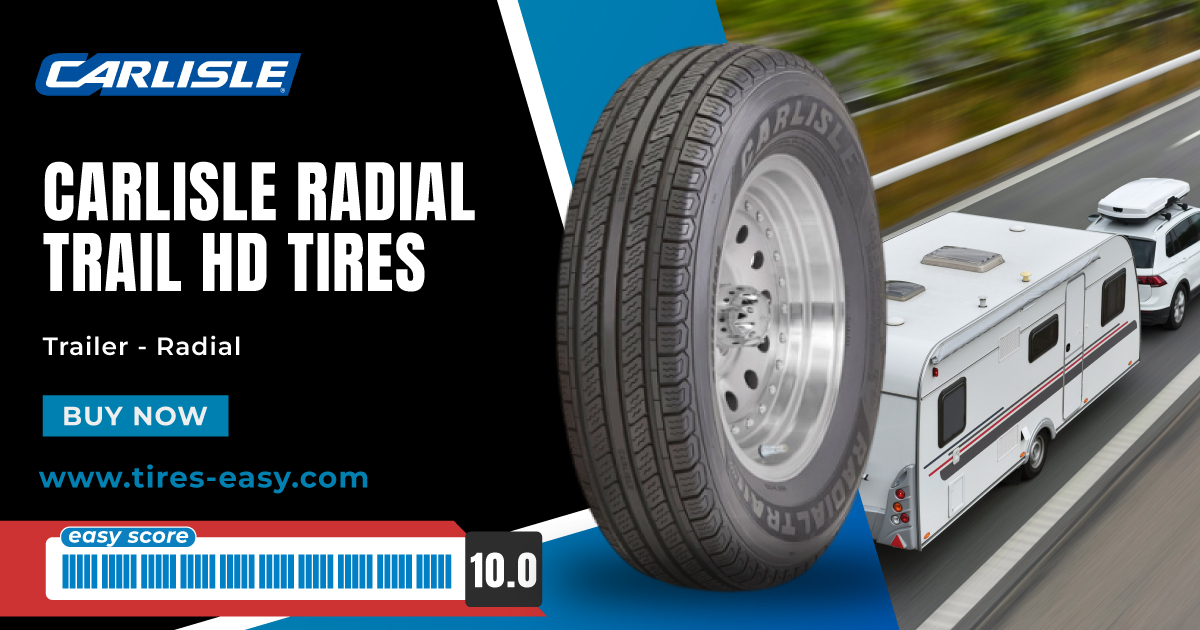
Known for its outstanding durability and heat resistance, this tire is suitable for various heavy-duty trailer applications, including toy haulers and travel trailers. Protect your travel trailer or toy hauler from dangerous highway heat build-up with a heavy-duty compound. Check current pricing for the Carlisle Radial Trail HD at Tires Easy.
Features:
- Heat-resistant tread compound for longer life and reduced rolling resistance.
- Optimized tread pattern for improved traction and reduced road noise.
- Durable internal structure to handle heavy loads.
Specifications:
- Sizes Available: ST205/75R14, ST215/75R14, ST205/75R15, ST225/75R15, ST235/80R16, among others.
- Load Range: C, D, and E, depending on size.
- Speed Rating: M (81 mph).
- Tread Depth: 8/32″.
- Max Load Capacity: Varies by size; for example
- Price: From $67 per tire, depending on size.
3) Maxxis M8008 ST Radial
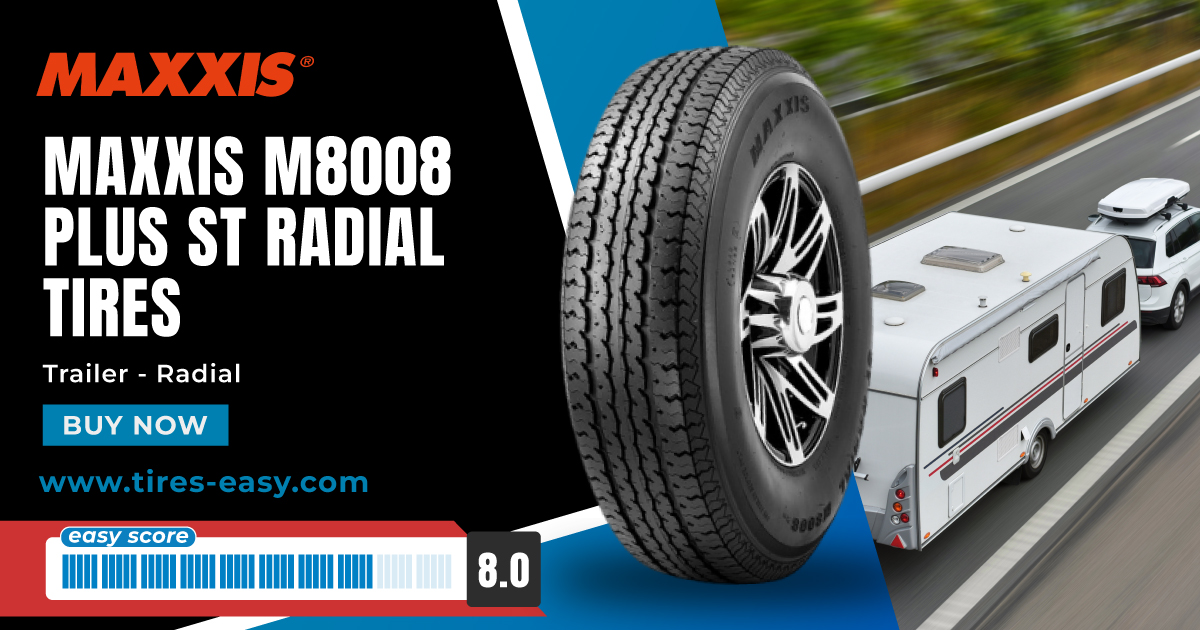
The Maxxis M8008 is widely praised by RV and boat owners for its high-speed stability, robust load capacity, and incredibly smooth towing experience. Upgrade your boat trailer or heavy RV with double steel-belted strength and an incredibly smooth towing experience. Check current pricing for the Maxxis M8008 ST Radial at Tires Easy.
Features:
- Advanced tread compound for improved wear and extended tread life.
- Double steel-belted construction for added strength and load capacity.
- Low rolling resistance design for better fuel efficiency.
Specifications:
- Sizes Available: ST205/75R14, ST215/75R14, ST225/75R15, ST235/80R16, among others.
- Load Range: C, D, and E, depending on size.
- Speed Rating: R (106 mph).
- Tread Depth: 9/32″.
- Max Load Capacity: Varies by size;
- Price: From $87 per tire, depending on size.
4) Trailer King ST Radial
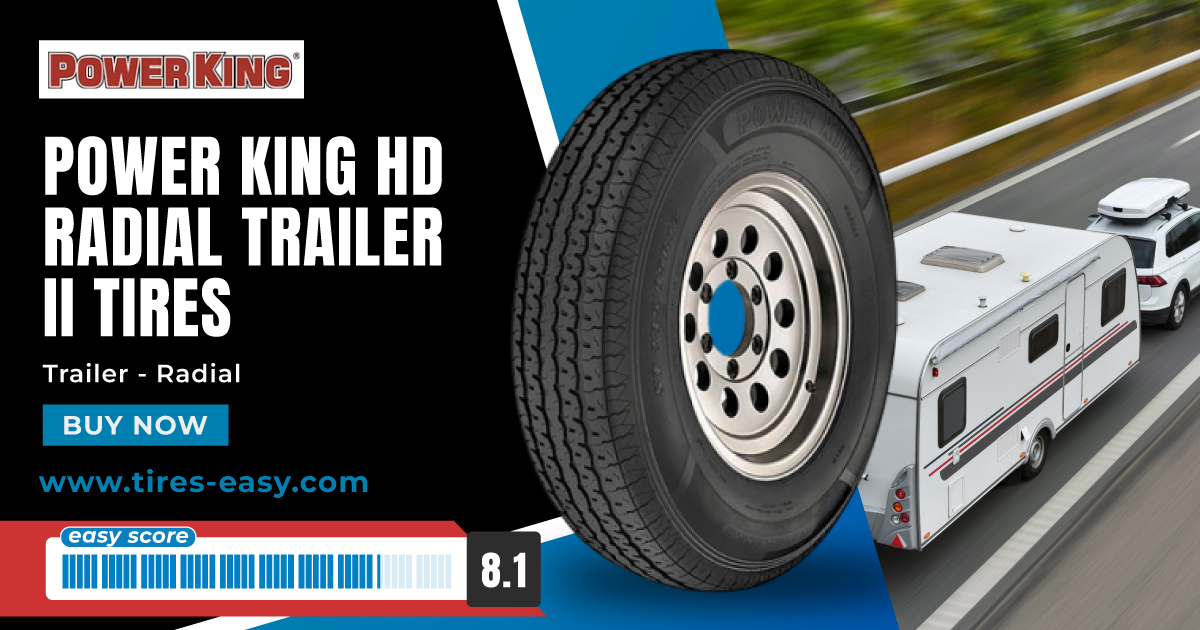
Offering a perfect balance between reliable performance and affordability, the Trailer King ST features an enhanced shoulder design for rapid heat dissipation on long trips. Keep your trailer running cool on long highway hauls with an enhanced shoulder design built for rapid heat dissipation. Find sizes and availability for the Trailer King ST Radial at Tires Easy.
Features:
- Center groove for consistent tracking and stability.
- Enhanced shoulder design for better heat dissipation.
- Nylon overlay construction for added strength and durability.
Specifications:
- Sizes available: ST175/80R13, ST205/75R14, ST225/75R15, ST235/80R16, among others.
- Load Range: C, D, and E, depending on size.
- Speed Rating: L (75 mph).
- Tread Depth: 8/32″.
- Max Load Capacity: Varies by size.
- Price: From $94 per tire, depending on size.
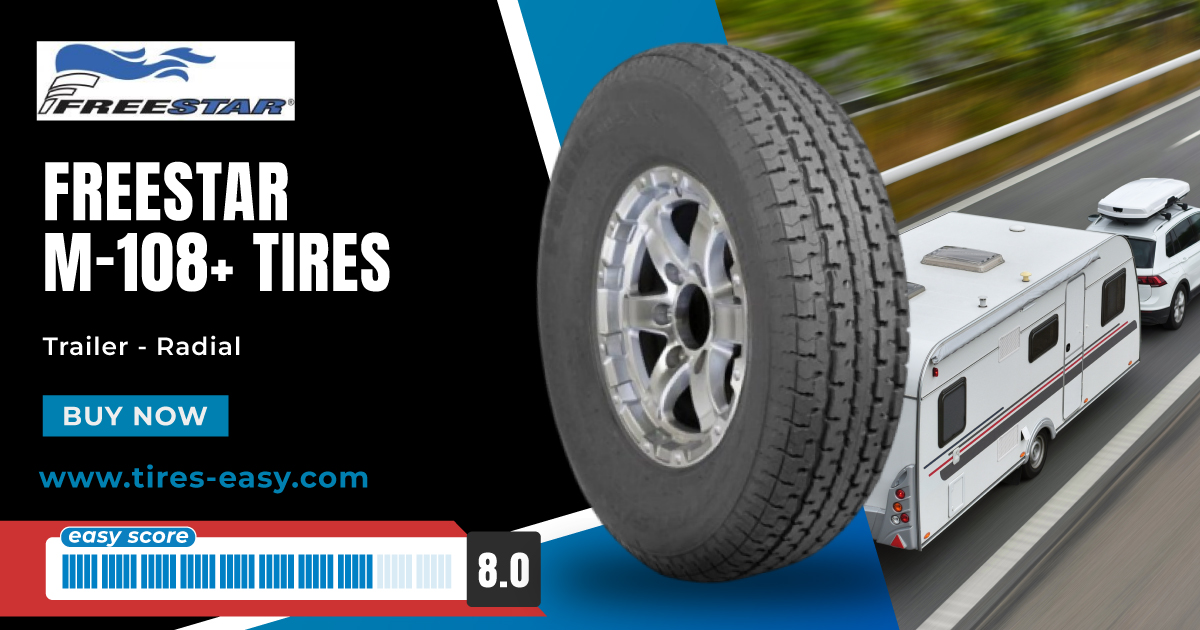
5) Freestar M-108+
The Freestar M-108+ is a heavy-duty bias-ply trailer tire designed for serious work environments. Its rugged rubber compound resists cuts and abrasions on job sites or farms. Maximize your trailer’s load-carrying capacity and eliminate side-to-side sway with a tough bias-ply construction. Find sizes and availability for the Freestar M-108+ at Tires Easy.
Features:
- Robust bias-ply construction for enhanced load-carrying capacity.
- Deep tread depth for extended tire life.
- Durable rubber compound to resist cuts and abrasions.
Specifications:
- Sizes Available: ST205/75D14, ST225/75D15, ST235/80D16, among others.
- Load Range: C, D, and E, depending on size.
- Price: From $46 per tire, depending on size
Why Tires Easy Is The Best Place To Shop Trailer Tires
Besides being bonafide tire experts, Tires Easy offers unbeatable deals. We provide a 45-day return policy, free delivery, and a massive inventory of high-quality trailer tires.
What sets us apart is our vast network of over 1,000 trusted tire installers, like Pep Boys and Monro. Select our free shipping and installation service at checkout for a fantastic, hassle-free deal. With over 7 million tires sold nationwide, we are the top choice for keeping your trailer rolling safely.
Conclusion:
Selecting the right trailer tire is essential for safe and efficient towing. By understanding tire construction, calculating your required load rating, and respecting speed limits, you can ensure your trailer performs at its best for years to come.
Always obey the rules of the road, check your tire pressure before every trip, and equip your rig with the best rubber available. Start your search today using the tire matching tool at Tires Easy!
FAQs: Trailer Tire Buying Guide
Can I use regular passenger car tires on my trailer?
No, it is highly discouraged. Passenger car tires (P-metric) are designed with flexible sidewalls focused on ride comfort and cornering. Trailer tires (Special Trailer or “ST”) are engineered with extremely rigid sidewalls to handle heavy vertical loads, prevent dangerous trailer sway, and resist the heat buildup caused by towing.
How often should I replace my trailer tires?
Most tire experts recommend replacing trailer tires every 3 to 5 years, regardless of how much tread is left. Unlike daily commuter cars, trailers often sit idle for long periods. This causes the tires to degrade from the inside out due to UV exposure, dry rot, and lack of use, making them susceptible to blowouts even if the tread looks brand new.
Should I inflate my trailer tires to the maximum PSI?
Yes. Unlike passenger vehicles where you follow the door jamb sticker, trailer tires should almost always be inflated to the maximum cold pressure (PSI) indicated on the tire’s sidewall. Maximum inflation ensures the tire can safely carry its full load capacity and minimizes the sidewall flexing that leads to excessive heat.
Can I mix radial and bias-ply tires on the same trailer?
It is strongly advised never to mix radial and bias-ply tires on the same trailer. Because these two types of tires have completely different internal constructions and flexing characteristics, mixing them will lead to unpredictable trailer tracking, uneven wear, and potentially severe handling issues on the highway.
What happens if I exceed the speed rating on my trailer tires?
Exceeding your trailer tire’s speed rating (for example, driving 85 mph on a tire with an “L” rating of 75 mph) generates extreme friction. Heat is the number one cause of trailer tire failure. Pushing the tire past its engineered speed limit drastically increases the risk of a sudden, catastrophic blowout. Always verify your speed rating before hitting the highway.