



Last Updated on September 17, 2026
Is the Nitto Ridge Grappler Right for Your Truck?
Choose the Nitto Ridge Grappler if you want mud terrain looks and off road capability without a mud terrain tire on your daily commute. It is a hybrid terrain design that sits between an all terrain and a mud terrain, with deep angled tread blocks, a variable pitch pattern tuned to cancel road noise, and two different sidewall designs so you pick which face shows. Owners consistently report it is quiet when new and develops a noticeable hum somewhere around the 30,000 mile mark or roughly half worn tread. The most common complaint is wet pavement grip, and the most common self inflicted problem is buying a heavier load range than the truck needs and then running sidewall maximum pressure. Get the load range right and this is a strong daily driver. Shop Nitto Ridge Grappler sizes and load ranges.
What Hybrid Terrain Actually Means
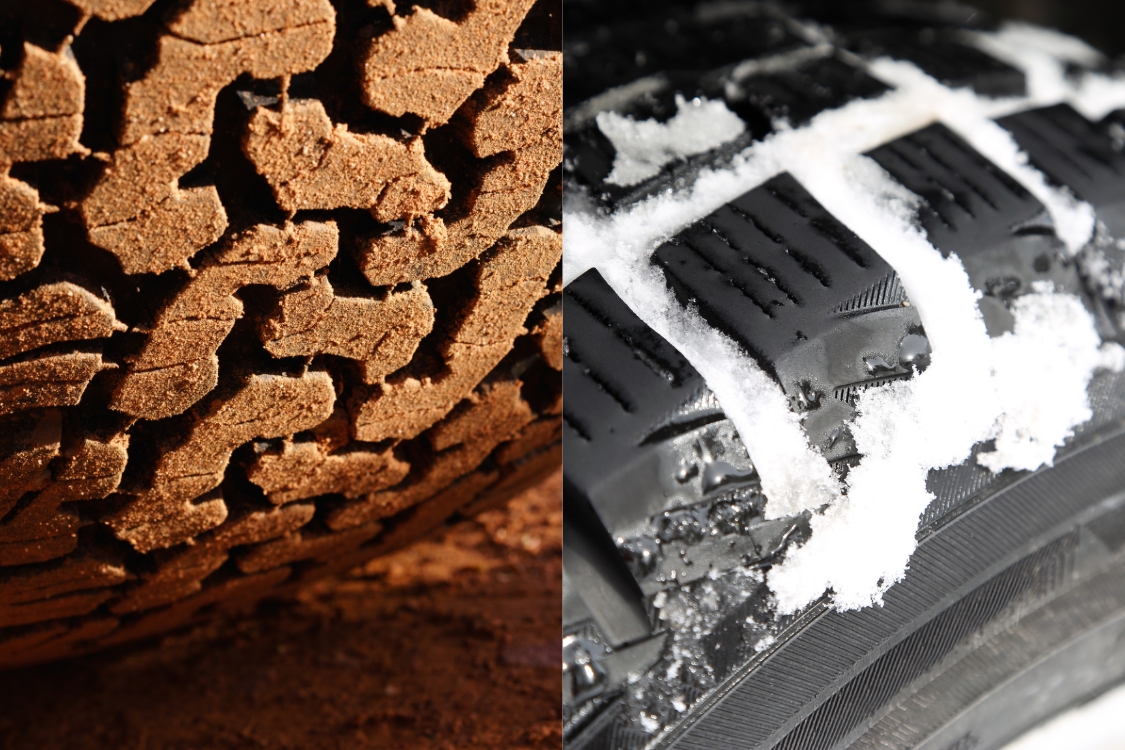
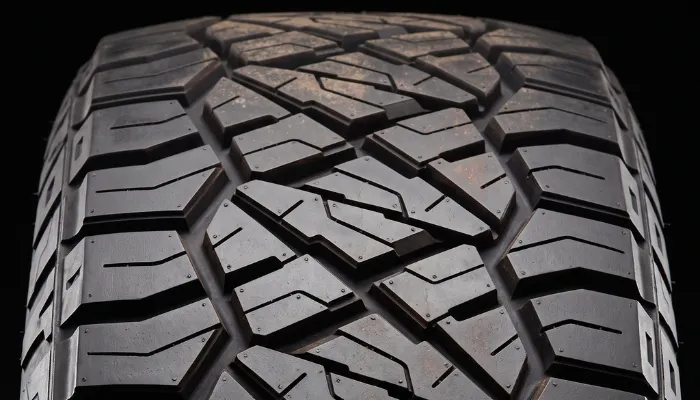
Tire marketing invents categories constantly, but this one describes a real design decision. A mud terrain tire uses large tread blocks separated by wide voids, which clears mud well and produces significant highway noise. An all terrain tire uses tighter blocks and smaller voids, which is quieter and grips pavement better but packs up faster off road.
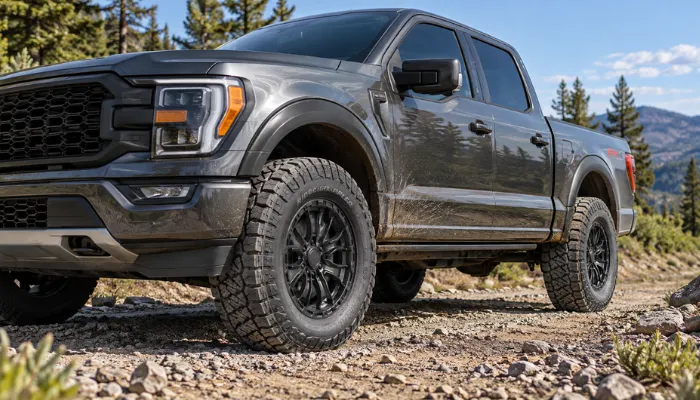
The Nitto Ridge Grappler splits the difference deliberately. It uses deep, angled tread blocks with staggered shoulder lugs for traction in mud, sand, rock and loose gravel, but arranges the tread pitch in variable widths so the noise frequencies partially cancel each other instead of stacking into a single tone. Stone ejectors sit at the bottom of the grooves to keep rocks from drilling into the casing, and reinforced block foundations reduce how much each block flexes under load.
The dual sidewall is the visual signature. One side carries a traditional pattern and the other carries a blockier off road design, and you choose which one faces out when the tire is mounted. Worth telling your installer which face you want before they mount all four, because fixing it afterward means dismounting.
The practical summary: if your truck spends most of its life on pavement but you want the look and the occasional capability, this design is aimed directly at you. If you are in mud most weekends, a true mud terrain tire clears better.
The Noise Question: Quiet New, Louder Worn
This is the single most contested point in owner discussions, and the disagreement resolves once you account for tread wear.
New, the tire is genuinely quiet for how it looks. That is the variable pitch pattern doing its job, and it is why so many first impressions are positive. The complaints come later. As the tread wears, the voids between blocks open up and the surface area touching the pavement changes, and the noise that the pitch pattern was cancelling starts to come through. Owner reports across truck and Jeep communities converge on the same rough timeline: a slight hum appearing somewhere around 30,000 miles, becoming clearly audible at roughly half worn tread.
Two things influence where you land on that curve. Larger diameters in the more open sizes tend to get louder sooner than the smaller metric sizes. And rotation discipline matters a great deal, because irregular wear across the tread produces far more noise than even wear at the same depth.
So both camps in the argument are right. The person who says it is quiet has 10,000 miles on the tire. The person who says it howls has 40,000 miles and possibly a rotation interval that slipped.
LT Versus XL: The Load Range Choice Behind Most Ride Complaints
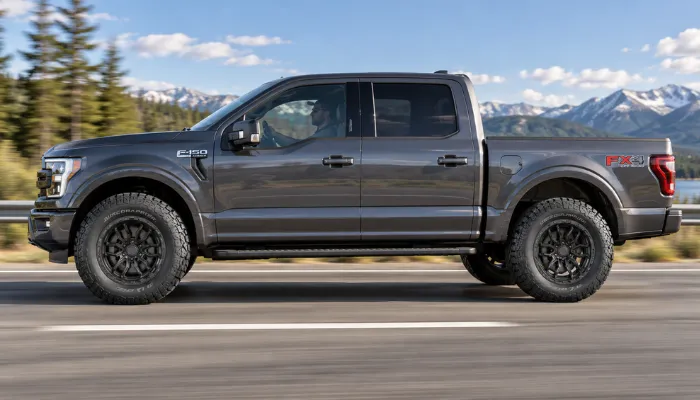
More Nitto Ridge Grappler ride quality complaints trace back to this than to anything about the tread pattern. The tire is offered in both light truck (LT) construction and in passenger metric construction with an extra load (XL) or standard load (SL) rating, and they are very different tires underneath the same tread design.
LT construction uses a heavier casing with more plies. It is what you want if you tow, haul, run heavy accessories, or drive in terrain where sidewall punctures are a real risk. It also weighs more, rides harder, and costs fuel economy.
Passenger metric construction in XL is lighter and rides much closer to the truck original equipment tire. For a half ton pickup or an SUV that mostly commutes, it is usually the better choice, and owners who moved from LT to XL on the same vehicle consistently describe it as the bigger improvement to daily comfort than any pressure adjustment.
The mistake is buying up. Fitting a load range F tire to a half ton truck that never tows gives you a stiffer ride, more weight to accelerate and stop, and no benefit you will ever use. Match the load range to what the vehicle actually does, not to the heaviest option available in your size.
Load range and ply rating reference
| Marking | Ply rating equivalent | Construction | Typical fit |
|---|---|---|---|
| SL | Standard load, passenger metric | Lighter casing | Light duty SUV and crossover use |
| XL | Extra load, passenger metric | Reinforced passenger casing | Half ton pickups and SUVs that commute and tow rarely |
| LT load range C | 6 ply rating | Light truck casing | Lighter light truck applications |
| LT load range D | 8 ply rating | Light truck casing | Moderate hauling and towing |
| LT load range E | 10 ply rating | Light truck casing | Three quarter ton and one ton trucks, regular towing |
| LT load range F | 12 ply rating | Heaviest light truck casing | Heavy hauling. More casing than a half ton commuter needs |
Whatever you choose, the load index printed on your door placard is the floor. Match it or exceed it. Never go under it.
Why the Pressure on the Sidewall Is Not Your Target Pressure
This is the fastest free fix for a Nitto Ridge Grappler that rides harshly, and it is the one most owners get wrong.
The pressure molded into the sidewall is the maximum the tire is rated to hold, not the pressure it should run at. Your target comes from the placard on the driver door jamb, and even that is calibrated for the original equipment tire. When you move to a heavier load range than the vehicle came with, running the placard number on a much stiffer casing frequently produces a ride that feels like the suspension stopped working.
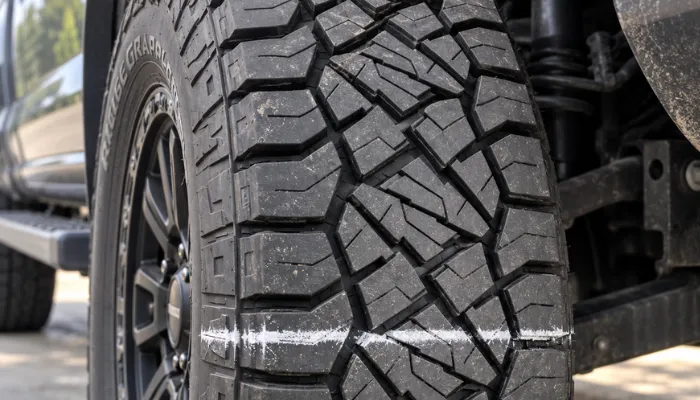
The reliable way to sort it out is the chalk test. Draw a line of chalk across the full tread width, drive a short straight distance on flat pavement, then look at what wore off. Chalk gone in the center only means the pressure is too high and the tire is crowning. Chalk gone at both shoulders but intact in the center means the pressure is too low. Even wear across the whole line means you found it.
For a half ton truck on a heavier load range set, owners commonly land somewhere in the high 30s to low 40s psi rather than the 50s or 60s that the sidewall permits. Verify it with the chalk test on your own vehicle rather than copying a number from a forum, because the correct pressure depends on your axle weights.
Wet Pavement Is the Most Consistent Criticism
If there is one durable complaint about this tire across communities, it is rain performance. Owners who otherwise rate it highly for looks, off road capability and dry manners describe wet grip as the weakest area, particularly when accelerating from a stop on an incline or pulling out into traffic on damp pavement.
This is a predictable consequence of the design rather than a defect. The large tread blocks and wide voids that clear mud put less continuous rubber in contact with wet pavement than a highway or all terrain tread does, and the deep grooves that help off road do less to shear a thin film of water on a smooth road surface.
What it means practically: leave more following distance in rain, and be deliberate about throttle from a stop on wet inclines. If your driving is mostly wet pavement commuting with occasional gravel, a dedicated all terrain tire will serve you better than a hybrid terrain design.
Winter reports are genuinely mixed. Some owners in high snowfall regions run these year round without complaint. Others report snow packing into the tread in very cold conditions and a temporary balance change until it clears. If severe winter is a regular part of your driving, a separate winter set remains the better answer.
Tread Life and Rotation Discipline
Reported mileage varies widely, and the spread tracks maintenance more than luck.
Owners who rotate on a tight interval, typically every oil change at around 5,000 miles, report reaching the high 40,000 mile range before replacement, with some tread chunking appearing near the end of life. Owners who let rotations slip report uneven wear appearing far earlier, in one case with visible irregular wear at 15,000 miles despite what the owner believed was a disciplined schedule.
Two habits protect the investment:
- Rotate every 5,000 miles, tied to oil changes so it does not get forgotten. Hybrid terrain tires are less forgiving of long rotation intervals than highway tires are.
- Confirm the alignment when the tires are installed. Irregular wear on a heavy, blocky tire is much harder to correct once it starts, because the wear pattern itself changes how the block contacts the road.
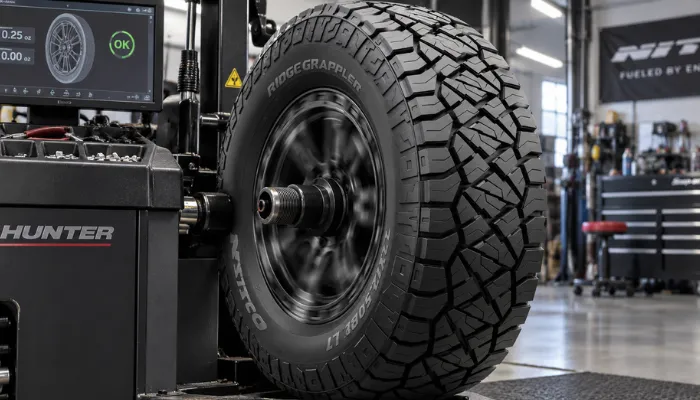
Also budget for balancing. These are heavy tires and they can require more weight than a highway tire to balance cleanly. Ask your installer to road force balance if that service is available.
Nitto Ridge Grappler Versus a Standard All Terrain Tire
The honest comparison is not against a mud terrain tire, which most buyers are not considering. It is against a conventional all terrain tire, which is what most buyers are actually deciding between.
| Consideration | Nitto Ridge Grappler (hybrid terrain) | Conventional all terrain tire |
|---|---|---|
| Appearance | Mud terrain look, dual sidewall option | Moderate, closer to a highway tread |
| Highway noise when new | Low for the tread style | Low |
| Highway noise when half worn | Noticeable hum reported by many owners | Increases more gradually |
| Wet pavement | Weakest area in owner reports | Generally stronger |
| Mud, sand and rock | Clears well, closer to a mud terrain | Packs up sooner in mud |
| Ride comfort | Depends heavily on LT versus XL choice | Typically softer in the same size |
| Best suited to | Trucks that see real dirt and want the look | Trucks that mostly commute with light trail use |
If the comparison leans toward the conventional option, browse all terrain tires for trucks and SUVs. If you are actually in mud most weekends and the hybrid design is a compromise you do not need, look at mud terrain tires instead.
Questions Owners Ask About the Nitto Ridge Grappler
Is the Nitto Ridge Grappler loud on the highway?
Not when new. It is quiet for how it looks, because the tread pitch is arranged in variable widths to cancel noise frequencies. Owner reports describe a hum developing around 30,000 miles and becoming clearly audible at roughly half worn tread. Consistent rotation delays it. Irregular wear accelerates it.
Should I buy the LT version or the XL version?
Buy LT if you tow, haul, or drive terrain where sidewall damage is a real risk. Buy XL if the truck mostly commutes. The XL rides much closer to the original equipment tire and weighs less. Buying a heavier load range than the vehicle needs is the most common cause of ride complaints about this tire.
How long does it last?
Owners who rotate every 5,000 miles commonly report reaching the high 40,000 mile range. Owners who let rotations slip report uneven wear appearing much earlier. Rotation interval predicts outcome here more than any other single factor.
How does it perform in rain?
Wet grip is the most consistent criticism across owner communities, particularly accelerating from a stop on damp inclines. It is a design consequence of the open tread, not a manufacturing problem. If most of your driving is wet pavement, a conventional all terrain tire is the better fit.
What pressure should I run?
Start from the door jamb placard, not the sidewall maximum. The sidewall number is the tire limit, not a target. Then verify with the chalk test on your own vehicle. On a half ton truck fitted with a heavier load range, owners commonly settle in the high 30s to low 40s psi.
Which sidewall should face out?
Whichever you prefer, but decide before installation. One side carries a traditional pattern and the other a blockier off road design. Changing your mind afterward means dismounting and remounting all four tires.
Is it a good tire in snow?
Reports are mixed. Some owners in high snowfall regions run it year round without complaint, while others report snow packing into the tread in very cold conditions. It is not a substitute for a dedicated winter tire if severe winter driving is routine for you.
Choosing Your Size and Load Range
The buying decision comes down to three checks. First, does your driving justify a hybrid terrain tread at all, or would a conventional all terrain serve you better on wet pavement? Second, LT or XL, decided by whether you tow and haul rather than by which sounds tougher. Third, does the load index meet or exceed your door placard.
Get those three right and the rest of the ownership experience is rotation discipline and correct pressure. Get the load range wrong and no amount of pressure adjustment fully fixes the ride.
Ready to size it up? Browse Nitto Ridge Grappler by size and load range, with free shipping and local installation through our installer network.