



Last Updated on August 18, 2026
Blizzak WS90 Discontinued: Should You Buy the Closeout or the IcePeak?
Yes, the Blizzak WS90 is discontinued, and so is the DM-V2, but the closeout stock is still the right buy for most drivers. Bridgestone consolidated two aging product lines into one new one, the Blizzak IcePeak, and the outgoing stock got marked down as a result launched nationally in May 2026 across 107 sizes from 14 to 22 inches, which is why the outgoing stock is marked down. Being discontinued has nothing to do with how well a tire stops. The exception is drivers who deal with glaze ice and freezing rain on a regular basis, who have a real reason to pay more for the newer tire.
- The IcePeak carries a certification the older tires do not: it is the first Bridgestone tire to hold both the 3PMSF severe snow rating and the newer Ice Grip mark for braking on ice.
- That does not automatically mean the older tires are worse on ice. Bridgestone told Car and Driver the WS90 and DM-V2 would probably have passed the Ice Grip test, but the company never ran it on them.
- Check the DOT date code before you buy closeout stock. A discontinued tire is more likely to have been sitting in a warehouse, and the sidewall tells you exactly how long.
Our recommendation: for packed snow, slush and cold rain, take the closeout. For frequent ice, pay for the IcePeak or choose a studless winter tire with a documented ice rating. Browse our full selection of Blizzak winter tires before the first freeze arrives.
What actually changed in the Blizzak lineup
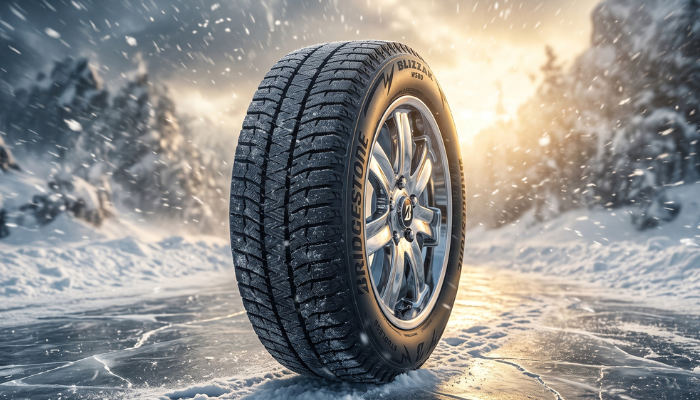
For years, Bridgestone split its studless winter range in two. The Blizzak WS90, introduced in 2019, covered coupes, sedans and minivans. The Blizzak DM-V2, which dates back to 2015, covered crossovers, SUVs and light trucks. If you shopped Blizzak, you picked one based on what you drove.
That split is over. Bridgestone announced the Blizzak IcePeak and launched it nationally in May 2026, and it replaces both tires with a single line. The company says it will be offered in 107 sizes from 14 to 22 inches, and that once the full range is out it will fit roughly 97 percent of the light-duty vehicles on US roads. Sedans, minivans, crossovers, SUVs and trucks all draw from the same model now.
This is a product consolidation, not a recall and not a safety issue. Both older tires were still being sold as current products through the 2025 to 2026 winter season. What changed is that Bridgestone stopped making them, which is why retailers are clearing what is left.
Why are the WS90 and DM-V2 suddenly cheaper?
Because nobody wants to hold winter tire inventory that has no future. A tire that is being discontinued cannot be reordered, so the remaining stock gets priced to move before the season ends. This is the same pattern you see whenever a manufacturer replaces a model, and it is the single best moment to buy a proven winter tire if your size happens to be one of the ones left.
The catch is size availability, and it gets worse as the season goes on. Popular fitments go first. If your size is listed today, it may not be in six weeks, and there will be no restock.
What the Ice Grip symbol means, and what it does not mean
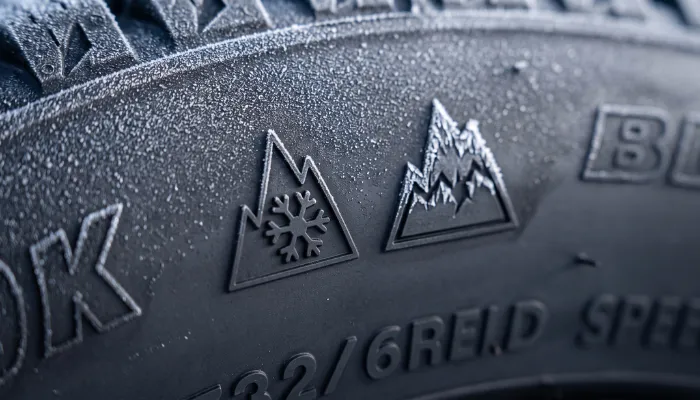
The IcePeak has a marking on its sidewall that the WS90 and DM-V2 do not carry, and it is worth understanding before you decide the older tires are obsolete.
You already know the first symbol. The three-peak mountain snowflake, usually written 3PMSF, has been around since 1999. To earn it, a tire has to accelerate in medium-packed snow at least 12 percent better than a standard reference tire under the ASTM F1805 test. It measures traction in snow. It says nothing about ice.
The Ice Grip mark is newer, introduced in 2021, and it fills that gap. It is an international standard that tests braking on an icy surface, and a tire has to beat the reference tire by at least 18 percent to qualify. The Blizzak IcePeak is the first Bridgestone tire to hold both marks, which is where its name comes from.
Here is the part that matters for your decision. The absence of an Ice Grip mark on the WS90 and DM-V2 does not mean they failed the test. It means Bridgestone never submitted them for it. Speaking to Car and Driver, a Bridgestone representative said the older tires would probably have passed, but the company has not run the certification on them. Both tires use the same MultiCell compound family that the certification is built around: a porous tread surface that draws the thin film of water off glaze ice so the rubber can make contact.
So the honest framing is this. The IcePeak has documented ice braking performance. The WS90 and DM-V2 have a long track record and no paperwork. That is a meaningful difference if ice is your main problem, and close to irrelevant if it is not.
Blizzak WS90 vs DM-V2 vs IcePeak: how they compare
| Feature | Blizzak WS90 | Blizzak DM-V2 | Blizzak IcePeak |
|---|---|---|---|
| Vehicle focus | Coupes, sedans, minivans | Crossovers, SUVs, light trucks | Sedans, minivans, CUVs, SUVs, trucks |
| Introduced | 2019 | 2015 | May 2026 |
| Current status | Discontinued, closeout stock | Discontinued, closeout stock | Current flagship |
| 3PMSF severe snow | Yes | Yes | Yes |
| Ice Grip certified | Not submitted for testing | Not submitted for testing | Yes |
| Tread compound | MultiCell | Next-generation MultiCell with hydrophilic coating | MultiCell with ENLITEN technology |
| Manufacturer wear claim | No published comparison | No published comparison | Improved over both, per Bridgestone internal testing |
| Best reason to choose it | Proven car tire at a closeout price | Proven SUV and light truck tire at a closeout price | Documented ice braking and lower rolling resistance |
Certification and product details come from Bridgestone. Wear and rolling resistance improvements are the manufacturer’s own internal testing, not independent results.
Is the DM-V2 actually worse on ice than the WS90?
This one comes up constantly in owner discussions, and the answer is more nuanced than either side usually admits.
The case against the DM-V2 is about how it behaves at the limit rather than how much grip it has. In technical owner communities like Bob Is The Oil Guy, experienced winter drivers describe the DM-V2 holding on well in a corner on ice and then releasing traction abruptly, without the progressive slide that warns you it is about to happen. The same drivers point out that the WS90 was specifically updated to address that characteristic in the car-focused line, while the SUV-focused DM-V2 was left on an older design for another several years.
The case for it is equally real. Other owners who have run both sets report no meaningful difference in normal driving, and several describe the DM-V2 as stable and predictable in deep snow. One long-running complaint about the WS90, from owners who liked it, is that it wears quickly.
Our read: for straight-line stopping in snow and slush, these are both good tires and the difference is small. If you regularly drive winding roads with glaze ice and you want the most predictable behavior when the tire lets go, the WS90 is the safer bet within the closeout range, and the IcePeak is the safer bet overall. Note that this is grounded in accumulated owner experience, not in a controlled comparison test, and no independent US test of the IcePeak against either predecessor has been published yet.
How much winter tire do you actually need?
Before you decide between three Blizzaks, it is worth checking that a studless winter tire is the right category at all. Winter compounds are formulated to stay flexible below 45 degrees Fahrenheit, and that flexibility is exactly what makes them wear faster and feel vague in warm weather. If you only see a few genuinely bad days a year, a different category may serve you better.
| Your winter | What matters most | Reasonable choice |
|---|---|---|
| Mostly cold rain, a couple of snow days per year | Wet braking, and grip when temperatures sit in the 30s and 40s | An all-weather tire with the 3PMSF rating, so you never swap wheels |
| Regular packed snow, roads get plowed | Snow traction and a compound that works below 45F | Any of the three Blizzaks, so buy on price and size availability |
| Frequent glaze ice and freezing rain | Ice braking specifically | IcePeak if your size exists, otherwise the WS90 from the closeout range |
| Heavy SUV or light truck, deep unplowed snow | Load rating plus snow traction | DM-V2 while stock lasts, or the IcePeak in a truck size |
| You store the car or barely drive in winter | Not paying for capability you will not use | Keep your all-season tires and stay off the road on the worst days |
When the closeout is the right call, and when it is not
Buy the closeout WS90 or DM-V2 if:
- Your winter is mostly snow, slush and cold wet pavement rather than ice.
- Your size is available now and the price is meaningfully below the replacement.
- You are replacing an existing set and already know how these tires behave on your vehicle.
- You want a known quantity. Both tires have years of real-world use behind them, which is more than can be said for any tire in its first season. Check what is left across the Bridgestone tires range before the popular sizes go.
Pay for the IcePeak instead if:
- Ice is your regular condition, not an occasional event. The certification exists for exactly this case.
- Your size is not in the closeout range, which will become more common as the season progresses.
- You expect to get several winters out of the set and want the newer compound, which Bridgestone says wears longer than both tires it replaces.
- You drive a hybrid or an EV and rolling resistance affects your range.
Should I buy now for a season I have not started yet?
Buying winter tires ahead of the season is a reasonable strategy when a model is being discontinued, because the constraint is inventory rather than time. Owners in enthusiast communities routinely buy a full season early when a good tire goes on clearance. If you do this, store the set out of direct sunlight, away from anything that generates ozone such as an electric motor, and stacked or hung rather than left standing on one spot for months.
Check the DOT date code before you buy closeout stock
This matters more than usual when you are buying a discontinued product, because closeout inventory has by definition been sitting somewhere. Rubber ages whether or not the tire has been driven on, and a winter compound that has hardened will not perform the way a fresh one does.
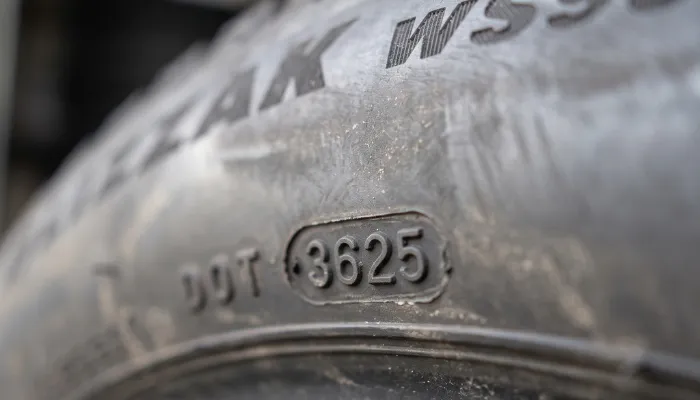
Every tire sold in the US carries a DOT code on the sidewall, and how to read a DOT date code is worth knowing before you order anything on clearance. The last four digits are what you want.
- Find the DOT stamp on the sidewall. On many tires the full code appears on only one side.
- Read the final four digits as a pair. The first two are the week of manufacture, the last two are the year.
- A code ending in 3625 means the tire was built in the 36th week of 2025.
- Compare that to today. Closeout stock built within the last year or two is normal and fine. Stock several years old is worth asking about, and worth a lower price.
If a retailer cannot tell you the date code before you order, that is a reasonable thing to ask about rather than accept.
One sizing point people miss when switching between these tires
The WS90 and the DM-V2 were built for different vehicle classes, and the sizes overlap in the middle. A midsize crossover in something like 225/65R17 may show results in both lines. They are not interchangeable in the way the shared size suggests.
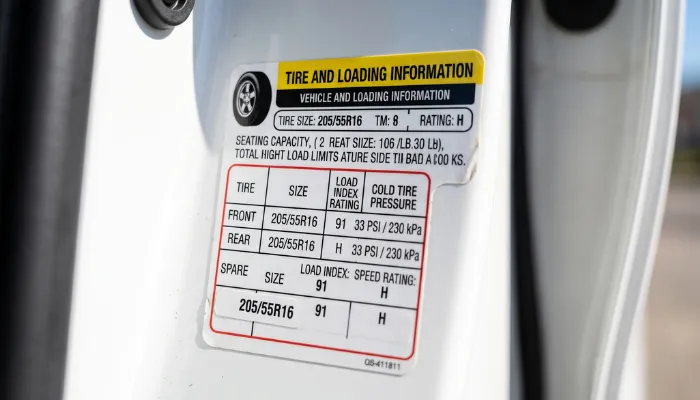
The DM-V2 range includes sizes with higher load indexes and Extra Load construction intended for the weight of a crossover or light truck. Fitting a tire with a lower load index than your vehicle placard calls for is not a comfort tradeoff, it is a load capacity problem. Check the placard inside the driver door and match or exceed the load index and speed rating listed there, and do it for all four corners rather than mixing.
If you are moving from a discontinued line into the IcePeak, the same rule applies. A single model covering everything from a compact sedan to a pickup means the range spans a wide set of load ratings, and the size alone does not tell you which one you are looking at.
FAQs
Is the Blizzak WS90 discontinued?
Yes. Bridgestone replaced both the Blizzak WS90 and the Blizzak DM-V2 with the Blizzak IcePeak, which launched nationally in May 2026. Remaining WS90 and DM-V2 stock is being sold through, and once a size is gone it will not be restocked.
Is it safe to buy a discontinued winter tire?
Yes. Being discontinued is a product lineup decision, not a safety notice. Neither tire was recalled and both were sold as current products through the previous winter. The only thing worth verifying is the DOT date code, so you know how long the specific set has been in storage.
What replaced the Bridgestone Blizzak DM-V2?
The Blizzak IcePeak. Bridgestone folded the car-focused WS90 and the SUV-focused DM-V2 into a single line that covers sedans, minivans, crossovers, SUVs and trucks, offered in 107 sizes from 14 to 22 inches.
Does the Blizzak IcePeak stop better on ice than the WS90?
It has certification the WS90 does not. The IcePeak holds the Ice Grip mark, which requires beating a reference tire by at least 18 percent in ice braking. Bridgestone has said the WS90 would probably have passed the same test but was never submitted for it, so there is no published head-to-head figure between the two.
How cold does it need to be before winter tires make sense?
Around 45 degrees Fahrenheit. Below that, all-season compounds start to stiffen and lose grip on dry and wet pavement, not just on snow. That threshold is why winter tires help in places that get very little snow but a lot of cold rain, and it is also why running them through a warm spring wears them out quickly.
Can I mix a WS90 on the front and a DM-V2 on the rear?
No. Fit four matching tires. Different tread patterns and compounds on the same vehicle produce inconsistent grip between axles, which is a problem specifically in the conditions you bought winter tires for.