



Last Updated on August 9, 2025
Trailer Weight Distribution and the Importance of Choosing the Right Tires
With the holiday season starting, you will notice that the roads are filling with trucks and SUVs pulling all kinds of trailers. From campers and boat trailers to car trailers and everything in between, many people will take the opportunity to hit the road with their trailer hooked to their vehicle.
However, even though pulling a trailer is relatively easy, it comes with significant danger to you and other motorists, mainly because the vehicle dynamics are completely changed when you have a trailer in the back. You need to understand the physics to know how to control it and drive safely. As many experienced drivers will tell you, having a trailer in the back is a whole different ball game compared to driving a single vehicle. The car companies are well aware of the difficulties, and the newer generation of full-size pickups (often used for such purposes) come equipped with electronic driving aids that help stabilize the trailer in extreme conditions.
However, the driver must understand the vehicle’s behavior and be able to control it effectively. Of course, the tires are a crucial part of the experience and an essential aspect of trailer safety. As the summer season approaches, millions of trailers will be on the roads in the US. Today, we will provide you with more information about safety and how to choose the right tires.
The Basics Of Trailer Weight Distribution
Trailer weight distribution refers to how the total weight of the trailer and its cargo is spread across the axles and how much of that weight is placed on the trailer hitch (tongue). It’s not just about how much you’re towing—but where the weight is located.
A properly balanced trailer should have the following:
- 60% of the load in the front half of the trailer (towards the hitch)
- 10–15% of the total trailer weight as tongue weight (on the hitch)
- Evenly distributed side-to-side over the axle(s)
When these ratios are off, it leads to dangerous towing conditions, as the balance of the trailer is compromised, and the speed of travel exacerbates the imbalance.
What Happens If You Don’t Set Up The Trailer Properly?
Incorrect weight distribution can severely affect how your trailer behaves on the road. Here’s what can go wrong:
1. Trailer Sway
If too much weight is placed behind the axle, the trailer becomes unstable and starts to sway from side to side at highway speeds, especially in crosswinds or during sudden maneuvers. Severe sway can cause accidents or a jackknife in the trailer.
2. Poor Braking and Steering
If the trailer is too heavy on the tongue, it can lift the front end of the tow vehicle, reducing steering and braking performance. This makes it more difficult to stop safely or respond to changing traffic conditions.
3. Tire Blowouts
Uneven weight puts more pressure on specific tires or axles, leading to overheating and potential blowouts, especially in high-speed or hot weather towing.
4. Bent Axles or Damaged Frame
Overloading a single axle or putting too much weight on one side can cause the trailer frame or axle to bend or fail over time.
5. Legal and Insurance Problems
Improper loading can result in failed roadside inspections, fines, or denial of insurance claims in the event of an accident.
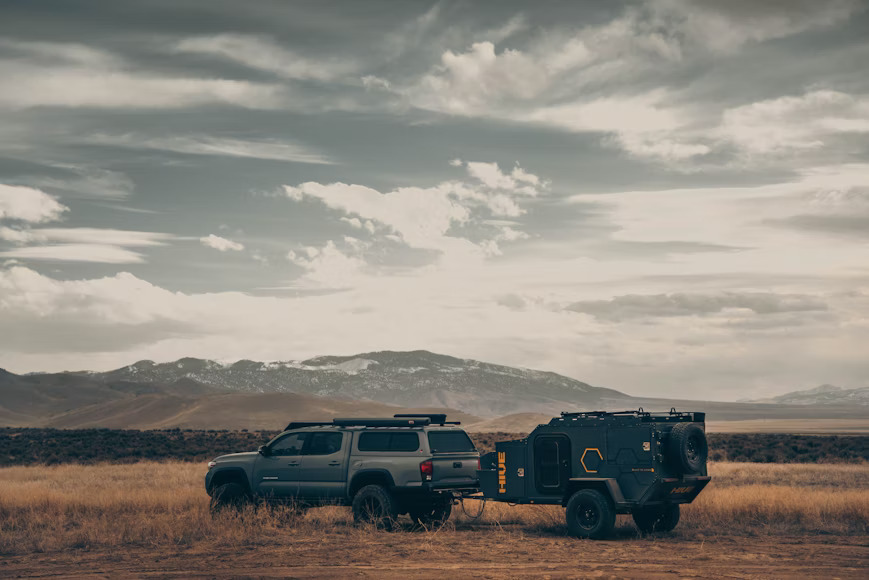
Finding the Right Vehicle for Towing Purposes.
Finding the right vehicle for pulling trailers depends on what you plan to tow, its weight, and how often you’ll be towing. It’s not just about getting a truck or SUV—it’s about matching the tow vehicle’s capacity, features, and setup to your trailer needs. You can pull a trailer with a small, compact car, but it can be hazardous. Here is what you need to know to find the right vehicle for the job.
Know Your Trailer’s Weight
Start with the Gross Trailer Weight (GTW)—this is the total weight of the trailer when fully loaded. Also, check:
- Tongue Weight (TW): 10–15% of the trailer’s weight is exerted downward on the hitch.
- Gross Combined Weight Rating (GCWR): Total of vehicle + trailer + cargo + passengers.
You should always plan for the maximum loaded weight, not just the empty trailer weight (also referred to as “dry weight”). That will give you a considerable margin and ensure a safe towing experience.
Match the Tow Rating
Check the towing capacity of any vehicle you’re considering. This information can be found in the owner’s manual or on the manufacturer’s website. Select a car with at least 10–20% more towing capacity than the loaded weight of your trailer.
- Small utility trailer: Can be towed by a midsize SUV or crossover (3,500–5,000 lbs capacity)
- Travel trailer or horse trailer: Needs a half-ton or three-quarter-ton truck (7,000–12,000 lbs capacity)
- Fifth-wheel or car hauler: Needs a heavy-duty truck (12,000–20,000+ lbs capacity)
Look for Key Features
A good towing vehicle has more than just power—it should also include:
- Tow Package: Factory-installed upgrades like transmission cooler, stronger axles, higher gear ratios, trailer wiring harness, and pre-installed hitch.
- Trailer Brake Controller: Essential for towing anything over 3,000–4,000 lbs.
- Rearview Camera with Trailer Assist: Makes backing and hitching safer.
- Payload Rating: Includes the weight of the tongue, passengers, and gear inside the vehicle.
- Integrated Sway Control and Trailer Stability Assist
- Electronic Safety Systems Calibrated For Towing Purposes
Consider the Drivetrain
- Rear-wheel drive (RWD): Best for towing on pavement and flat terrain.
- Four-Wheel Drive (4WD)/All-Wheel Drive (AWD): Better traction on slippery or off-road surfaces but can reduce towing capacity slightly.
Wheelbase and Suspension Matter
- Longer wheelbase vehicles are more stable when towing.
- Stiff rear suspension (like that found in trucks and some body-on-frame SUVs) handles tongue weight better than soft, car-like suspension.
Transmission and Engine Type
- Automatic transmissions are usually preferred for towing, especially those with tow/haul mode.
- Diesel engines offer more low-end torque for heavy trailers.
Gas engines offer good towing in lighter applications but may be less efficient under constant load. If you opt for gas engines, look for naturally aspirated ones and avoid turbocharged engines. The turbocharged engines generate excessive heat, especially under heavy loads, which is something you want to avoid.
Best Towing Tires In 2025
1. Goodyear Endurance ST
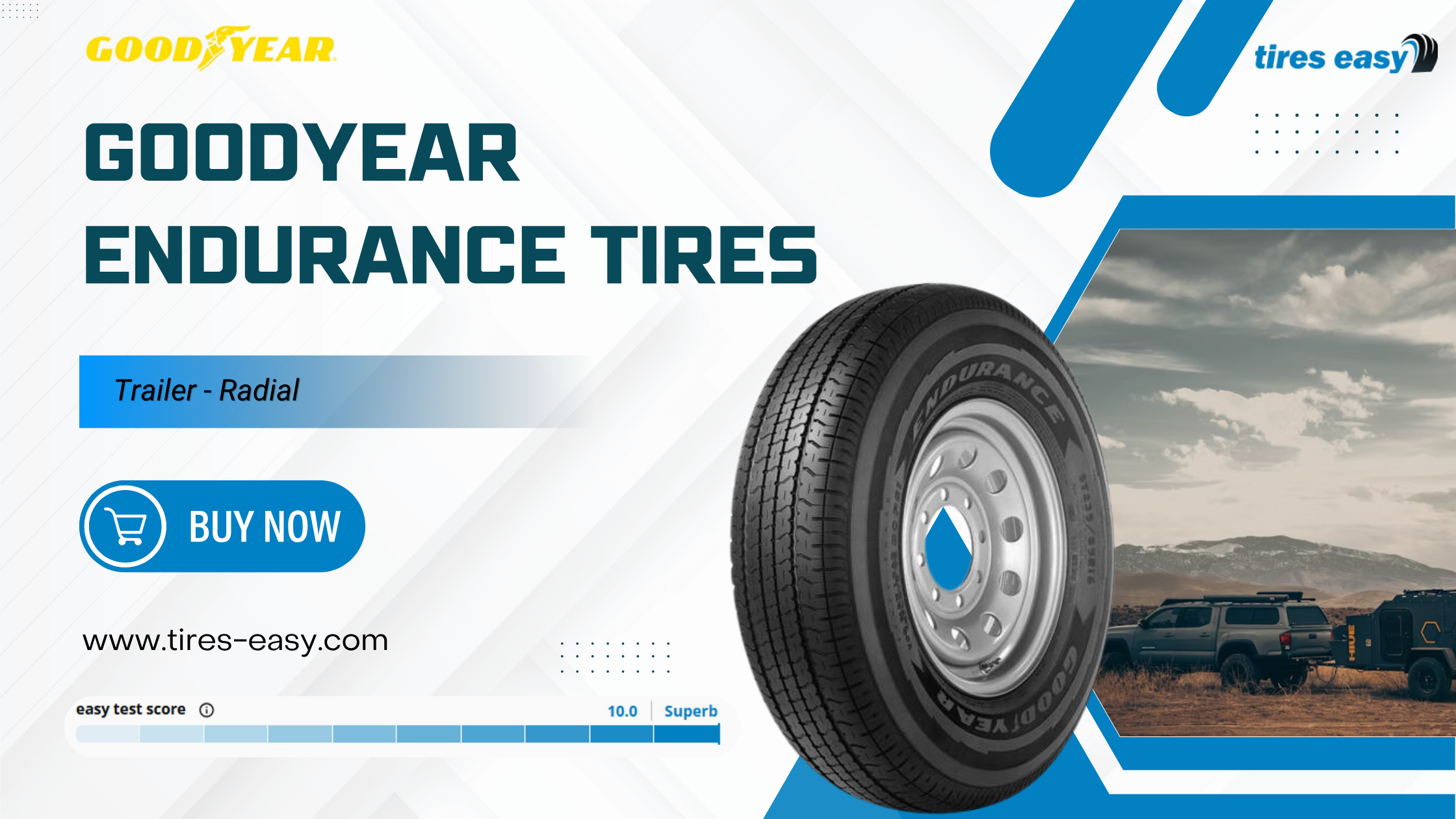
Features:
- Steel belts reinforced polyester for heavy loads
- Decoupling groove & optimized tread to reduce heat
- Durawall sidewall protection (scuff/abrasion)
- Enhanced inner liner for reduced air loss
Specifications
- Load Range / Ply: D (8 ply)
- Load Index / Max Load: 105 / 2,040 lb per tire
- Speed Rating: N (87 mph)
- Tread Depth: 8/32″
- Price: Click Here For The Price
2. Maxxis M8008 ST Radial
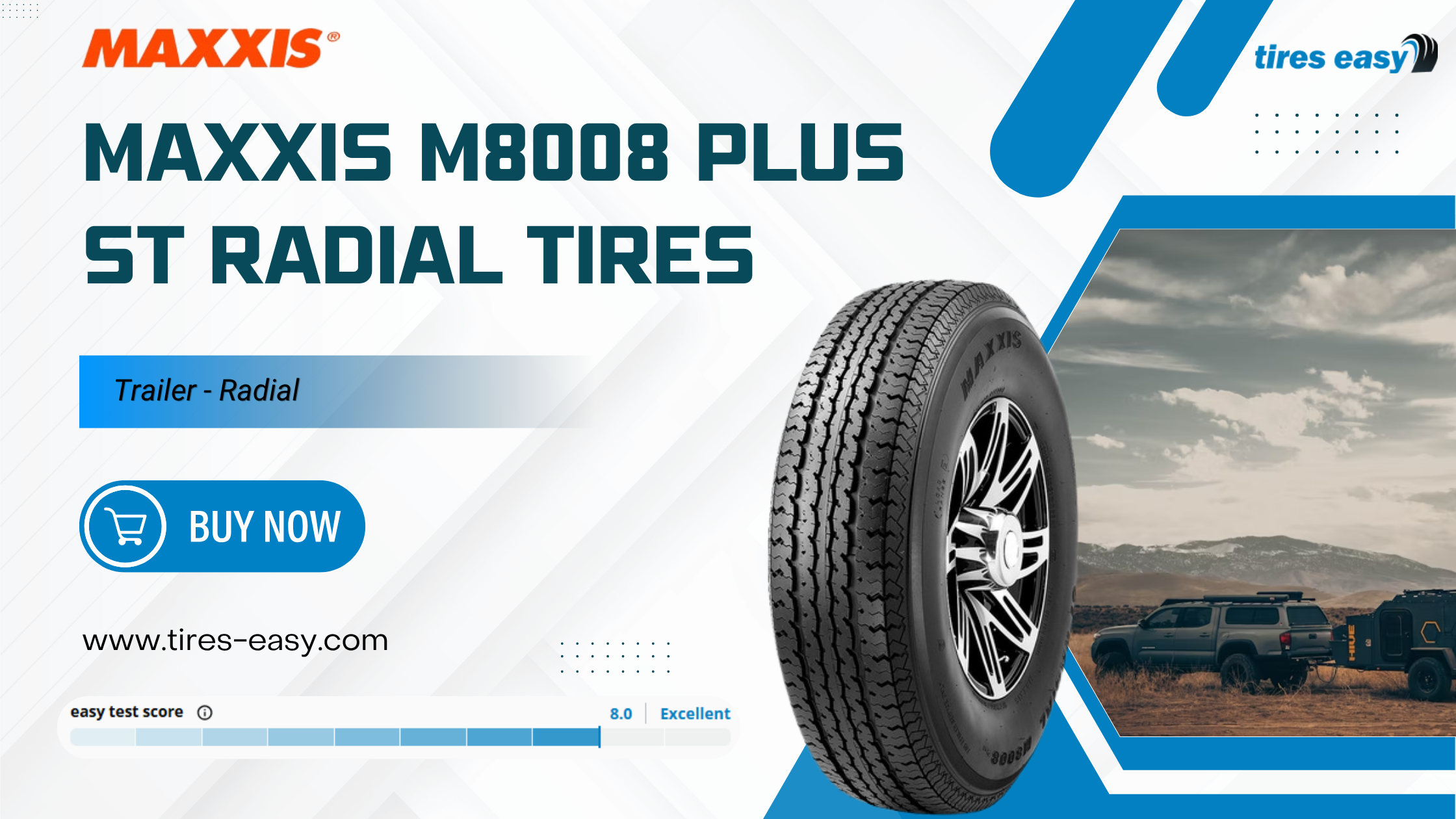
Features:
- Durable tread compound minimizes heat build-up
- Smooth, quiet highway performance
- Reliable on long-distance hauls
Specifications:
- Ply Options: 6, 8, or 10 ply, depending on model/size
- Construction: All-season radial for trailers
- Price: Click Here For The Price
3. Trailer King RST
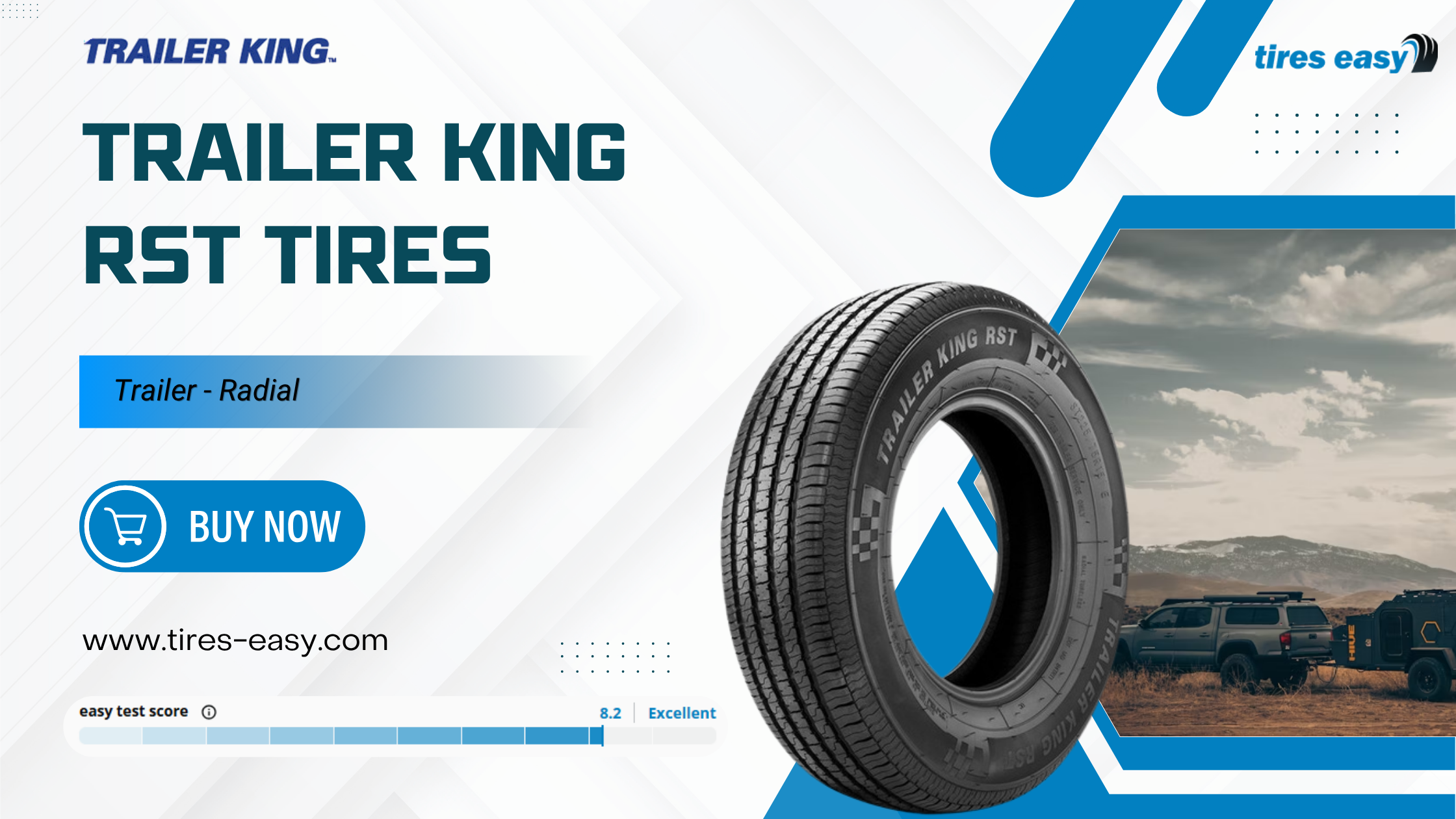
Features:
- Radial specialty tread for heat dissipation
- Advanced compound with all-season traction
- Reinforced internal structure for stability & long life
Specifications:
- Ply / Load Ranges: C (6 ply) to F (12 ply), commonly E (10 ply)
- Speed Rating: N or M (75–81 mph)
- Tread Depth: ~8/32″
- Price: Click Here For The Price
Conclusion:
Even though modern tow vehicles are equipped with pretty impressive electronic aids, powerful engines, and stability controls, you still need to have a clear understanding of vehicle dynamics, physics, and weight distribution to tow safely. Of course, you will need a proper set of tires, and you can choose them from our list according to your needs and preferences.